
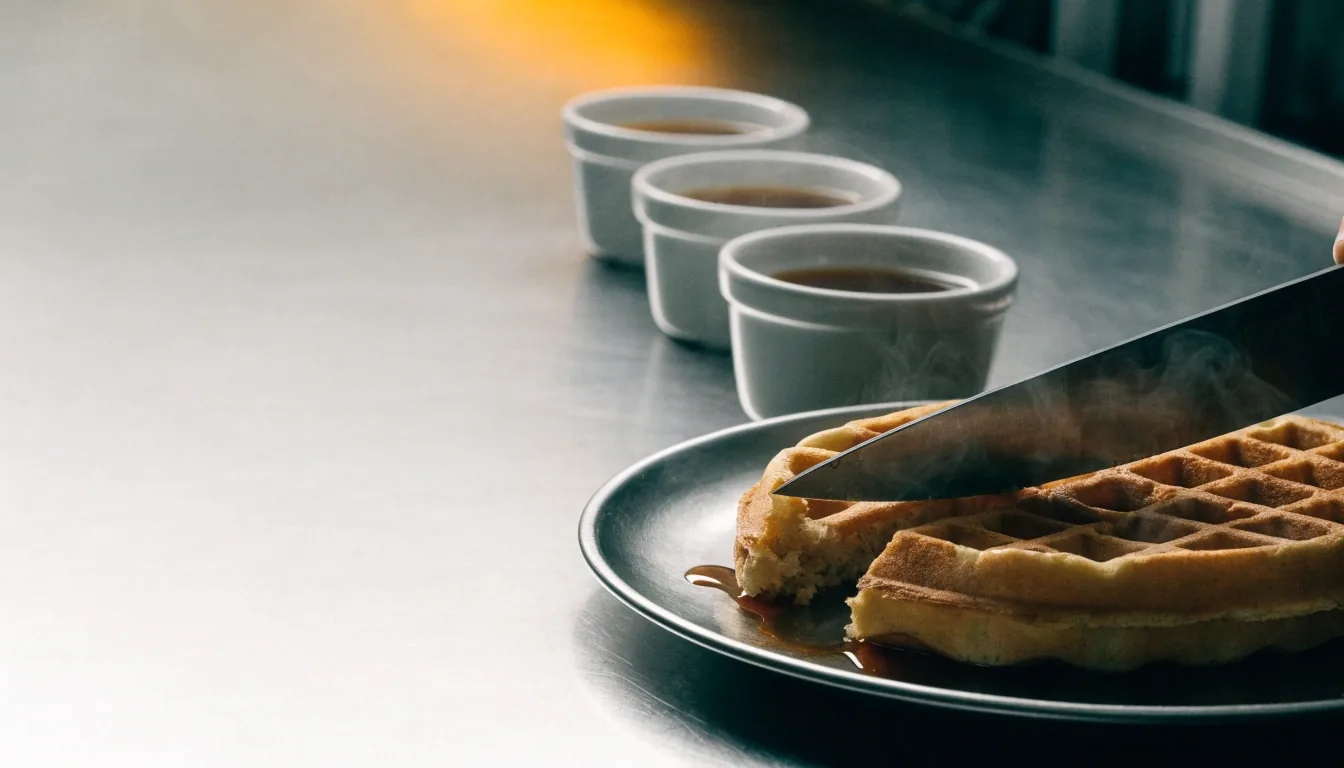
A fresh waffle on a warm steel plate on a brushed stainless counter, with four syrup ramekins receding out of focus to the right.

The pass, read sideways

Build your counter.

Four ramekins, one waffle, and a batter that can carry whatever lands on it. Start here, then work the syrup and sauce recipes on the other pages.

What this page carries

A waffle base that can carry the toppings

Every syrup on this site assumes a waffle that can hold up under it. That means a batter with enough structure to crisp on the outside and stay tender inside, and a cook time long enough that the surface dries before it leaves the iron. This page gives one dependable base and two variations that pair with the toppings elsewhere on the site.

Work through it in order the first time. Once the base is reliable, the peanut butter and pecan variations on this page — and the copycat waffle house syrup and waffle house pecan waffle recipe ideas on the other pages — have something steady to sit on.

The base batter

Eight ingredients, one bowl of dry and one of wet

Flour, baking powder, sugar, salt, eggs, milk, melted butter, and vanilla. Whisk the dry ingredients in one bowl and the wet in another, then combine them with a few strokes. Lumps are fine at this stage. Overmixing develops gluten and gives you a chewy waffle instead of a crisp one.

A batter that is a touch lumpy on the pour is exactly right — the pockets of flour hydrate in the rest that follows and you get a lighter interior. If you want to be precise, hold the milk back by two tablespoons and add it only if the mix feels stiff; humidity on the counter decides more than the recipe card does.

Why the batter rests

Ten to fifteen minutes on the counter

Let the batter sit for ten to fifteen minutes before it goes in the iron. The flour hydrates, the baking powder starts working, and the batter thickens slightly. A rested batter spreads more evenly and produces a more consistent waffle, especially on the second and third pours when the iron is fully hot.

You can rest longer in the refrigerator if you are cooking the next morning — just bring the bowl back to room temperature so the butter does not set into flecks, and give it one slow stir before the first pour.
Cooking and the crisp window

The thirty extra seconds

Spray or brush the iron, pour to just under the edge, and close the lid. Cook until the steam slows and the waffle releases without pulling. Then leave it in the iron for another thirty seconds with the lid closed. That extra time is what turns a pale, soft waffle into one with a crisp shell. Serve immediately; a waffle held under a towel softens within minutes.

If your iron runs cool, let the first waffle be the test. It will tell you more about the setting than any dial marker does.

30

Seconds past the steam

The single habit that changes the plate more than any ingredient on this page: leave the lid closed after the steam quiets, then serve right away instead of stacking under a towel.

Two variations

Same base, two different plates

Both variations start from the eight-ingredient base above. Do one, do both, or pour the plain base and let the toppings decide the mood.

Peanut butter waffles

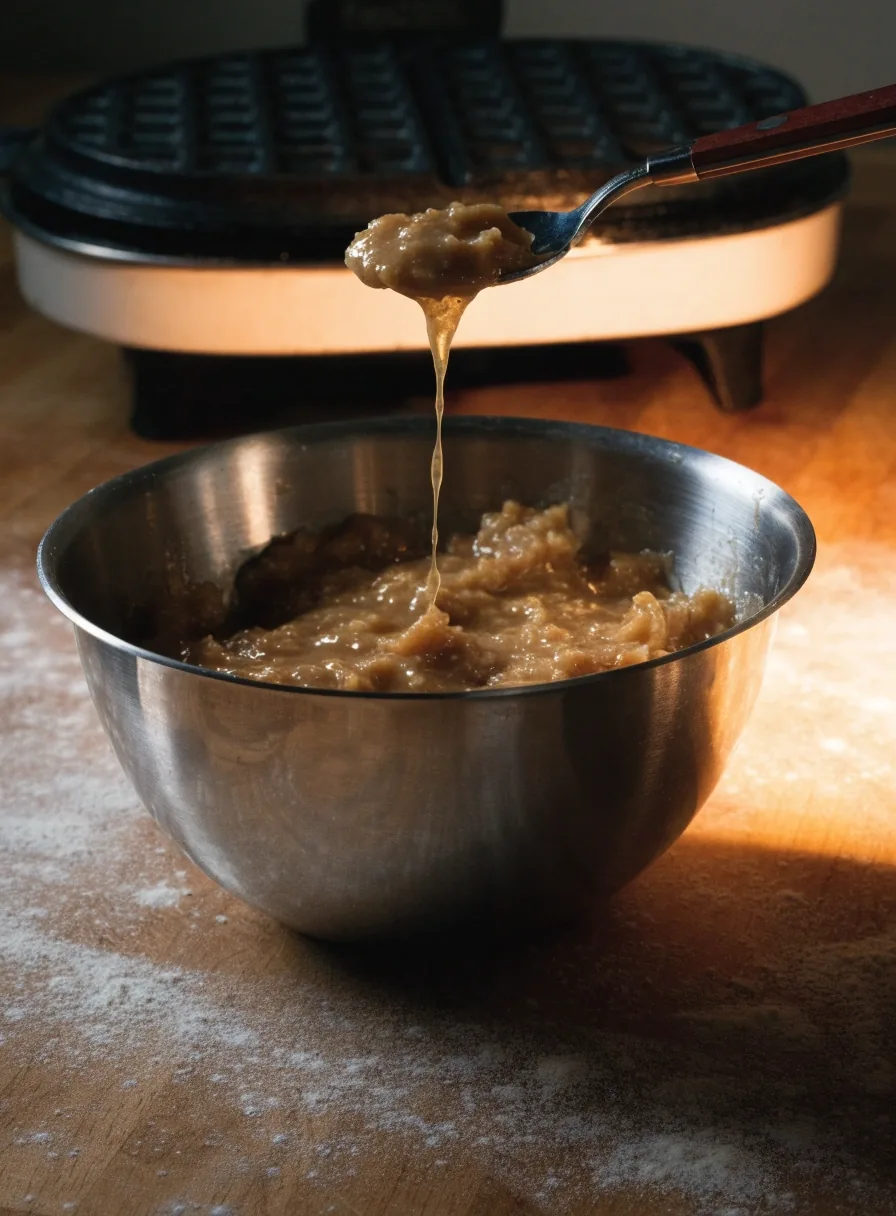
A steel bowl of peanut butter loosened with warm syrup, a spoon resting across the surface.

Add to the wet ingredients

Add two tablespoons of peanut butter to the wet ingredients and reduce the melted butter slightly to compensate. Warm the peanut butter first so it incorporates instead of staying in streaks. These waffles take a pourable peanut butter topping and a little cocoa syrup better than the plain base does, because the flavor in the waffle is already there.

Pair it with the peanut butter and cocoa style toppings from the toppings page — the waffle house peanut butter waffles recipe idea behind this variation is that the batter itself carries half the flavor.

Pecan waffles

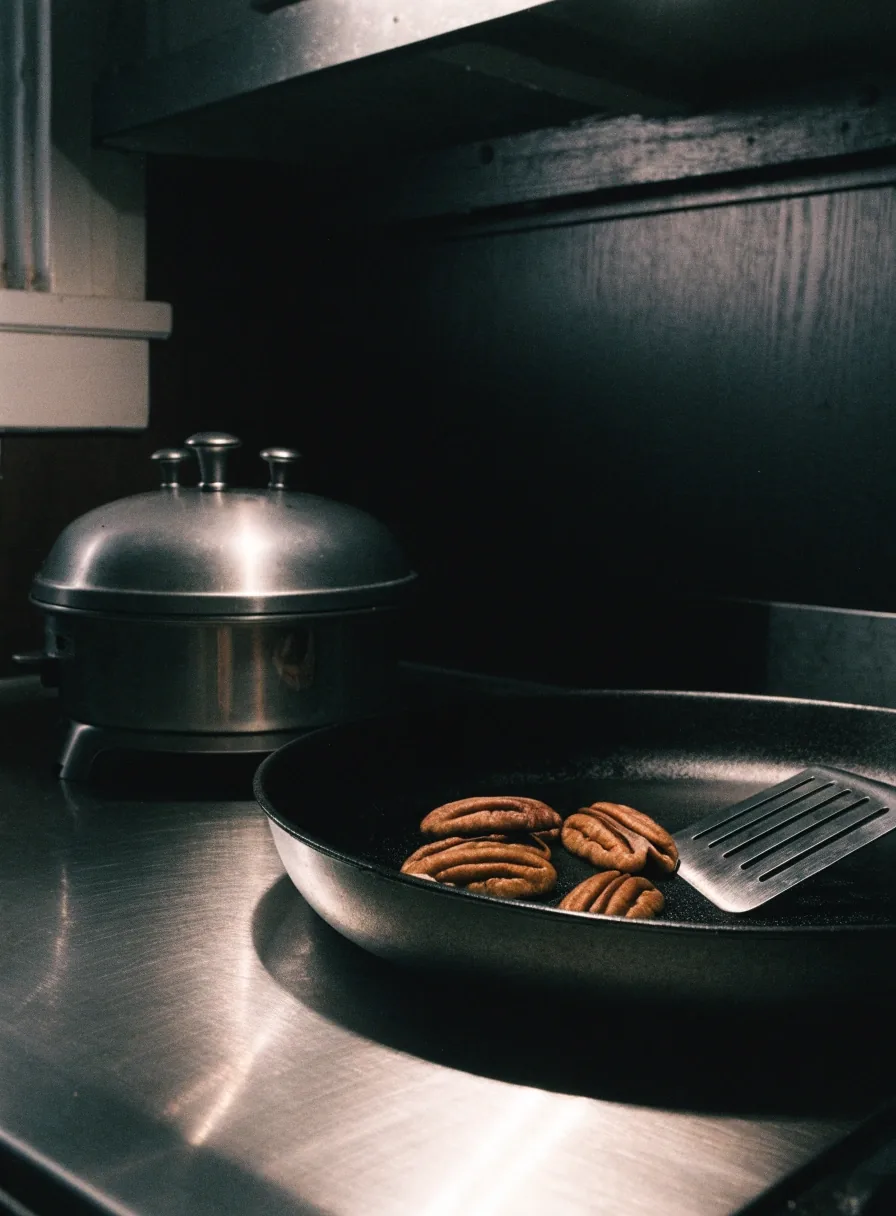
Pecan halves toasting dry in a black steel skillet on a warm griddle surface.

Fold in at the end

Fold a half cup of toasted chopped pecans into the batter at the end, after the wet and dry are combined. Toasting them first is not optional; raw pecans in batter come out flat. These are the waffles to serve with brown sugar butter syrup and nothing else, so the nuts stay the point of the plate.

Keeping a batch warm

Wire rack, not a plate

A 200°F oven with the waffles on a wire rack, not a plate, keeps them crisp while you finish the rest of the batch. Stacking them on a plate traps steam and undoes the work. If you are cooking for a crowd, hold finished waffles in the oven and serve them all at once rather than handing them out one at a time.

Give the rack a little air under it — a half-sheet pan below catches crumbs and lets the bottom of each waffle breathe. Twelve to fifteen minutes is about as long as they will hold before the edge loses its snap.

Common batter problems

Four fixes, no new recipe

  • Sticking The iron was not hot enough, or it needed another coat of spray.
  • Flat and soft Too much liquid, or the lid was opened too early.
  • Tough The batter was overmixed.
  • Pale Not enough time in the iron after the steam stops.

None of these need a new recipe; they need one adjustment next time. Change a single variable per batch and you will know which one it was.

Questions we hear

Rest, crisp, and holding a batch

The four questions that come up most when someone is working through the base and the two variations on this page.

How long should waffle batter rest before cooking? +

Ten to fifteen minutes is enough. The flour hydrates and the batter thickens slightly, which gives a more even waffle. Longer resting is fine in the refrigerator, but bring the batter back to room temperature before pouring.

Why are my waffles soft instead of crisp? +

Usually not enough time in the iron. Cook until the steam slows and the waffle releases, then give it another thirty seconds with the lid closed, and serve it right away rather than stacking it on a plate.

Can I add peanut butter or pecans directly to the batter? +

Yes. Warm the peanut butter first and reduce the melted butter slightly so the batter does not get too loose. Toast pecans before folding them in, and add them after the wet and dry ingredients are combined.

How do I keep a batch of waffles warm without making them soggy? +

Hold them in a 200°F oven on a wire rack, single layer, uncovered. A plate or a towel traps steam and softens the surface within a few minutes.

The line ends here

Take the base and go

Send a correction or a question if a step does not land the way it should — the working notes on this page get sharper every batch someone tests.

Kitchen contact