A brushed steel counter set with a lineup of waffle topping vessels — compote, whipped cream, powdered sugar, caramel, cinnamon, nut butter and a butter syrup — receding out of focus to the right

Build your own counter

Four ramekins. One waffle. Build your own counter.

Toppings are a balance problem. A waffle brings crispness and a mild, slightly sweet base, and every spoon you add either fits against that or fights it.

Read the plate, not the label

Four jobs, not four toppings

Think about what each thing does rather than what it is. Build a plate that covers all four lanes and it will taste finished; cover only sweets and the plate reads flat by the third bite.

  • Crunch

    Pecans, toasted

    Dry-toasted halves and chopped pieces give the plate its structure. They are what the waffle's crisp edges echo back.

  • Richness

    Butter syrup

    Brown sugar, butter and a pinch of salt, reduced until it coats the back of a spoon and pools in the grid.

  • Acidity

    Fruit sauce

    A cooked blueberry, strawberry or cherry compote cuts the sugar. It is the single most useful topping on the table.

  • Cold and air

    Whipped cream

    Barely sweet, whipped just before serving. It should melt into the warm syrup rather than sit on top of it.

A waffle-house-style toppings recipe starts here: naming the four jobs first makes the shopping list shorter, not longer. Once you know a plate wants crunch, richness, acidity and cold, a copycat waffle topping set becomes a handful of make-ahead items instead of a pantry renovation.

Method ledger

The methods, in order

Six preparations

01

Pecan topping, done properly

Toast chopped pecans in a dry skillet for three or four minutes, until they smell nutty, then take them out of the pan. If you are coating them in syrup or brown sugar, do it off the heat and keep them separate from the wet toppings until serving. Coated pecans soften within a day, so this is a same-day topping — for a waffle-house pecan waffle recipe, hold the crunch back until the plate is ready.

02

Peanut butter that drizzles

Warm peanut butter with a spoonful of simple syrup or hot water and stir until it falls off the spoon in a ribbon. Salted peanut butter balances a sweet waffle better than unsweetened. For a fuller plate, pair it with sliced banana or a small amount of cocoa stirred into the syrup — this is the same idea behind a waffle-house peanut butter waffles recipe, taken one step further than the jar.

03

Blueberry and other fruit sauces

A cooked fruit sauce is the most useful topping on the table because it carries acidity. Blueberries with sugar, water, vanilla and lemon are the standard version. Strawberries, cherries, or a mix of berries work the same way. Serve it warm, and keep it on the side so people can add it in the amount they want — the same fruit compote approach scales to any soft fruit you have.

04

Whipped cream and powdered sugar

These are finishes, not features. Whipped cream should be barely sweet and made just before serving; it does not hold for long at room temperature. Powdered sugar goes on last, through a small strainer, and only on plates that are not already carrying a syrup. Both add lightness, which a heavy plate needs.

05

Butter spreads for the base layer

A butter spread goes on the waffle before anything else, while it is hot. Softened butter with a little brown sugar and salt is the version most people want — the same logic as a waffle-house-style butter spread recipe, only written down. It melts into the grid, so the syrup that follows has something to sit on instead of running straight through. Do this and a smaller amount of syrup tastes like more.

06

What to skip

Anything with a lot of water in it, added cold. Sliced fresh fruit is fine in small amounts, but a cup of it on a waffle produces a puddle. Heavy frostings, which are built for cake. And an artificial maple flavoring used as a substitute for a real syrup, which tastes thin next to butter or brown sugar and does not carry the plate.

Pairings that hold up

Plates built from four lanes

These are the combinations we cook most often at home. Each one covers crunch, richness, acidity and cold in different proportions, so a whole morning of waffles never reads as the same plate twice.
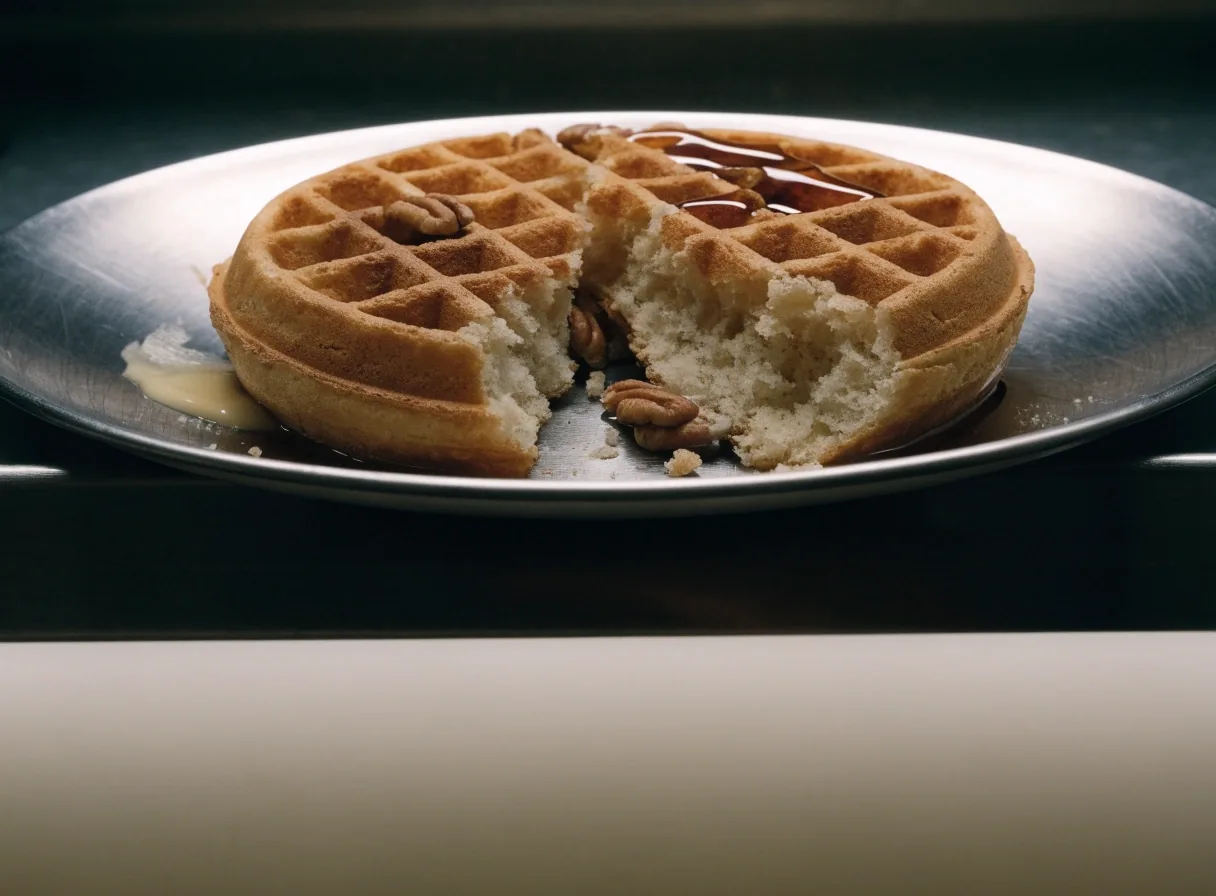
A crisp waffle broken open on a warm steel plate with three syrup ribbons pooling on the far side

The all-rounder

Butter spread, butter syrup, pecans

The plate that converts people. Softened butter with brown sugar and salt goes on while the waffle is hot, a thin ribbon of butter syrup follows, and toasted pecans land last so they stay crisp. Add a spoonful of whipped cream at the table and you have all four lanes covered without any one of them shouting. It is also the closest thing to a waffle-house syrup recipe done at home, and it is the plate most people ask us to write down.

Bright and cold

Blueberry compote and cream

Warm blueberry sauce over a butter-spread base, then a cold spoonful of barely sweet cream. The compote carries the acidity; the cream cools it. Skip the powdered sugar here — the plate already has a syrup and does not need a second dusting.

Nut-led

Drizzled peanut butter and banana

Salted peanut butter loosened with warm syrup until it ribbons, sliced banana in a thin layer, and a short grind of salt on top. The banana takes the place of the whipped cream — it is the cold item, and it keeps the plate from turning into dessert.

Two fruits

Cherry compote, cocoa, cream

Cherry compote with a small spoonful of cocoa stirred in, served over a plain buttered waffle. The cocoa reads as a warm bitter note under the fruit. Whipped cream at the table, and no nuts — this is the softer plate for people who want the sweet side first.

Build it yourself

Set the table, not the plate

Small bowls, a pitcher of warm syrup, cold items in the refrigerator until the last moment. A waffle holds its crispness for a few minutes off the iron, and letting people build their own plate costs nothing and makes the whole thing work better.

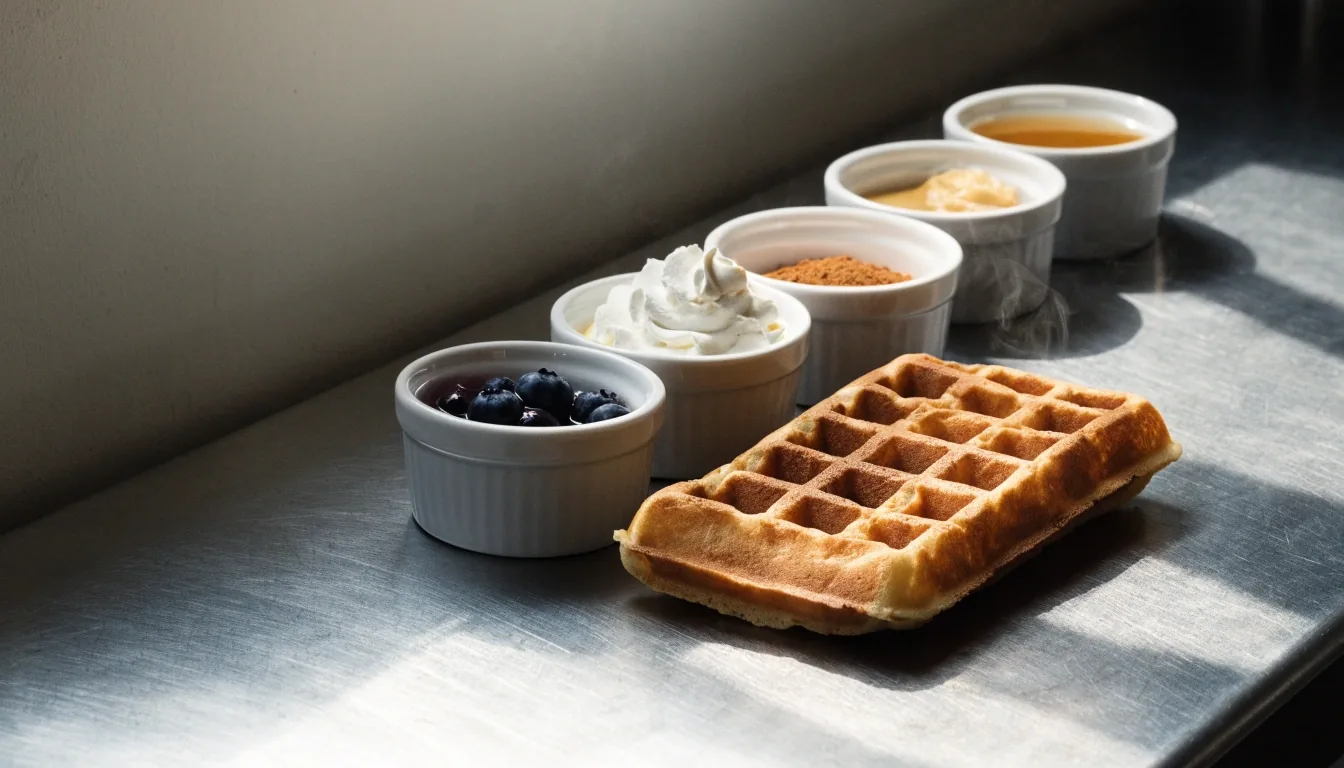
On the iron and off it

What the plate looks like, step by step

Four frames, in the order they land on the plate. Nothing here is a staged photo — these are the same moves you make at the counter, and each one is timed so the cold item stays cold and the crisp edges stay crisp.

If you are building a copycat waffle topping spread for a table of four, cook the fruit sauce first, keep it warm in a pitcher, and work through the rest while the waffles come off the iron.

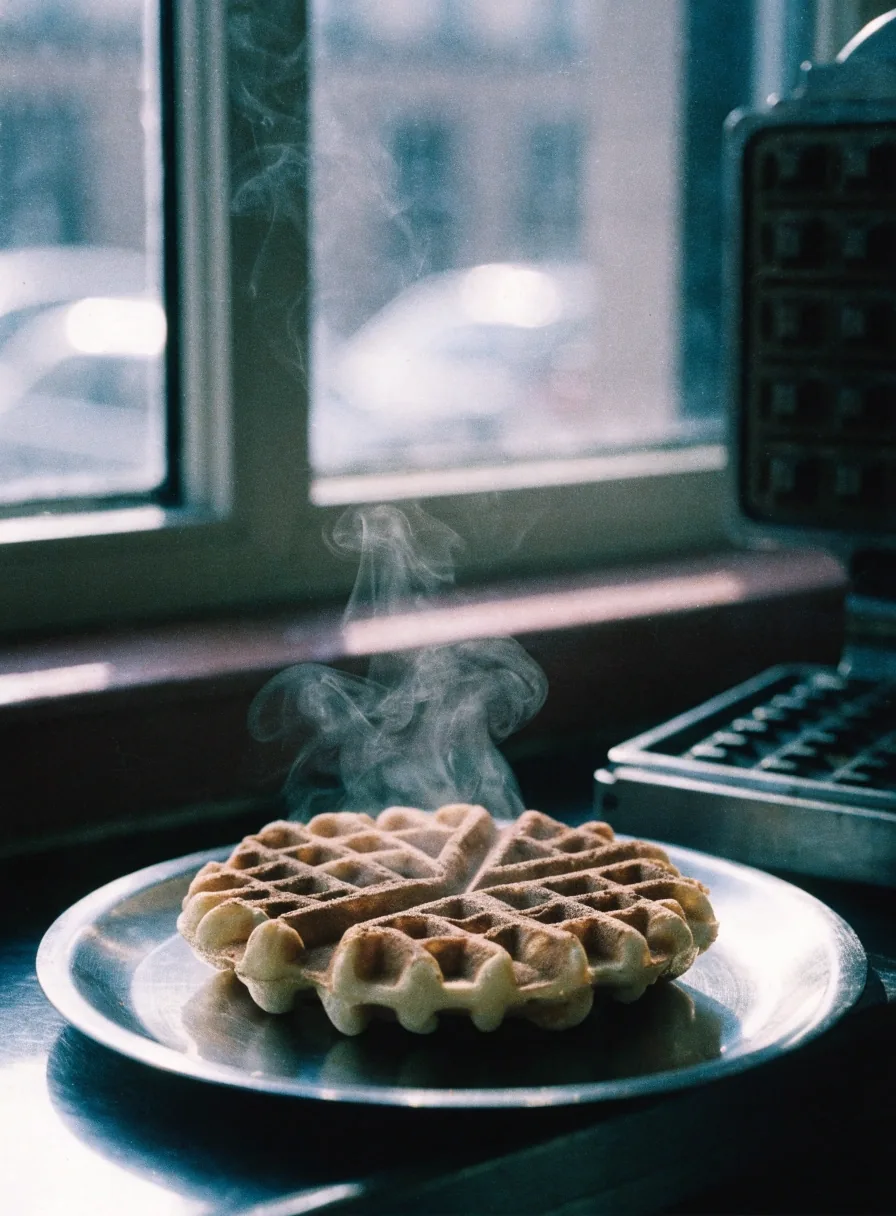
  1. A plain waffle fresh off the iron with steam rising from its grid, before any topping is added

    Butter spread first

    While the waffle is hot, so the butter melts into the grid and the syrup has something to sit on.

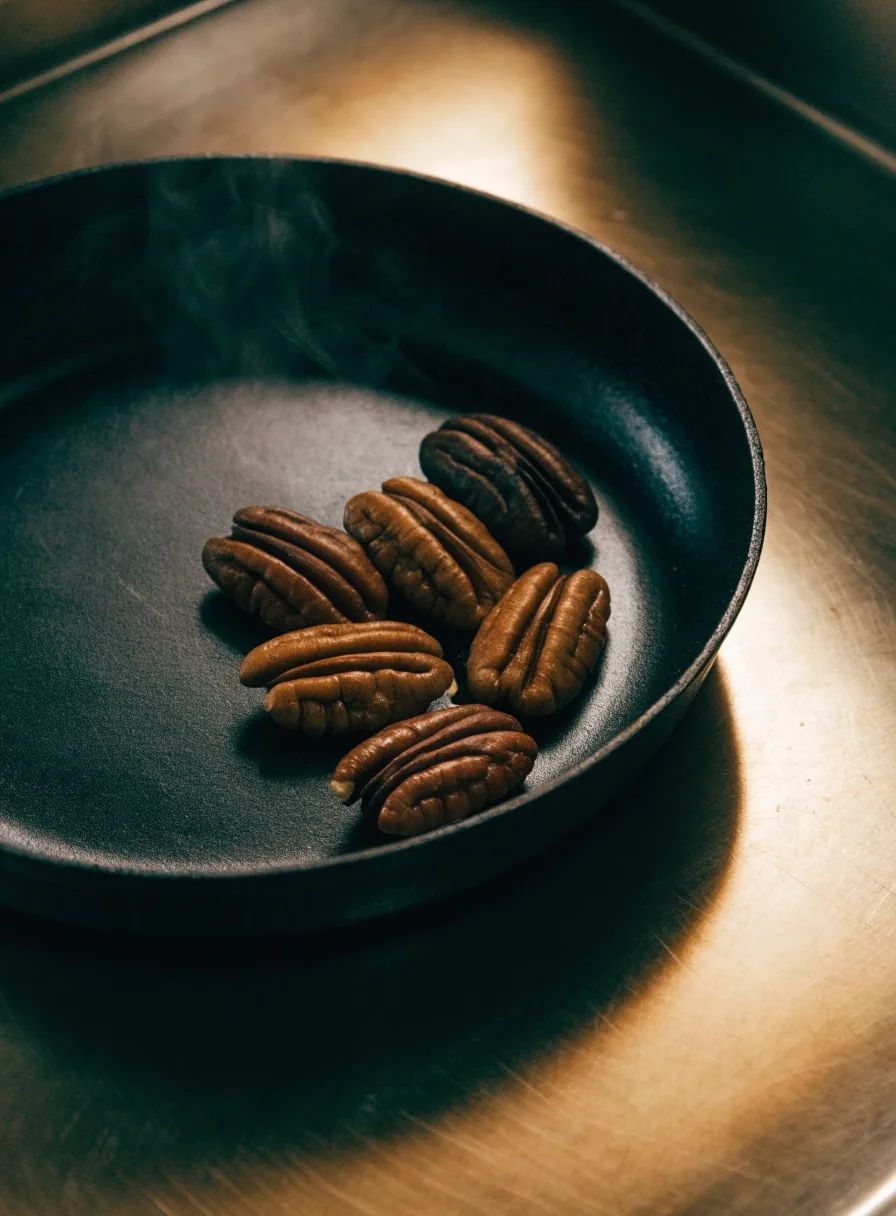
  2. Pecan halves toasting dry in a black skillet on a warm griddle surface

    Pecans, dry-toasted

    Three or four minutes in a dry skillet, then out of the pan. Coated nuts go on last and go on the same day.

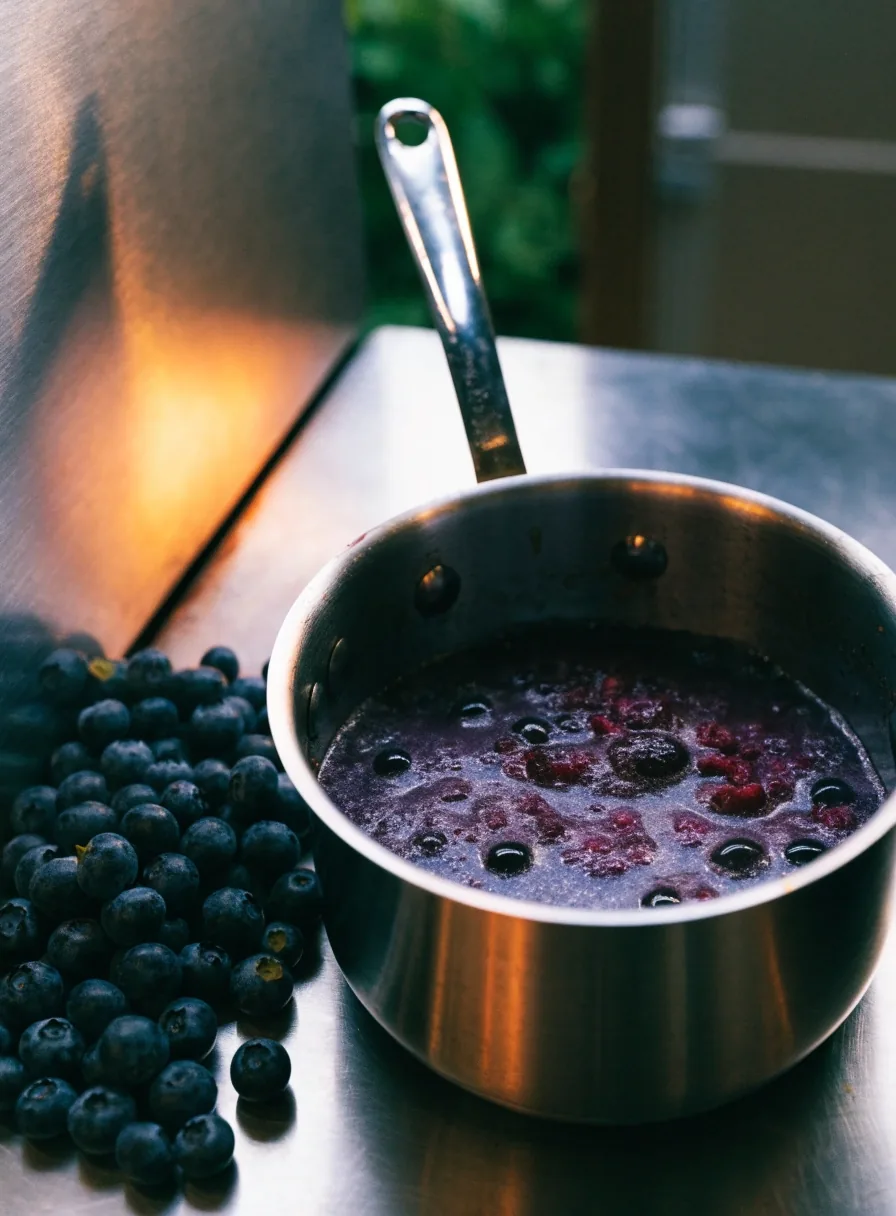
  3. Blueberry compote reducing in a steel-handled saucepan with berries bursting into deep violet-red syrup

    Fruit sauce, warm

    Blueberries, sugar, water, vanilla and lemon, cooked down until the syrup coats a spoon. Kept on the side.

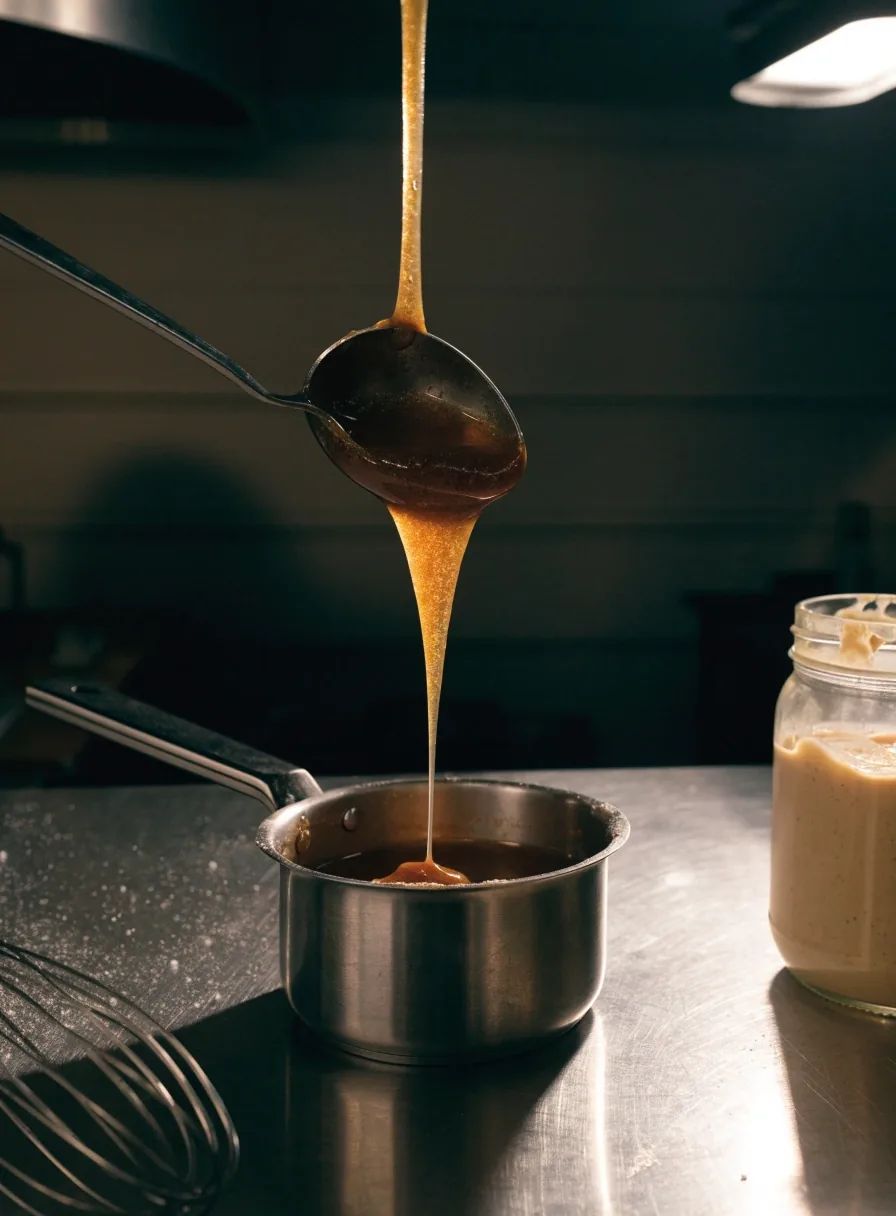
  4. Brown sugar butter syrup at ribbon stage with a spoon lifted and an amber thread falling from it

    Syrup and nut butter

    Warm syrup first, then nut butter loosened until it ribbons. Both go on while the waffle is still warm.

Whipped cream and powdered sugar come last, at the table. Keeping the cold items in the refrigerator until the moment someone builds a plate is the single detail that keeps a waffle-house-style topping spread from turning soft before the second waffle comes off the iron.

Where this goes next

Take the toppings to the syrup and the waffle

Toppings only solve half the problem. The syrups and sauces page carries the full method for the butter syrup, the fruit compotes, the drizzled peanut butter and the loose sauces that hold the plate together, and the waffle recipes page covers the base — the grid, the crisp edges and the timing off the iron. Read them together and a copycat waffle topping spread stops being a morning of guesswork.

Keep it simple

Three notes before your first plate

  • Warm sauces go in a pitcher, not a bowl. A pitcher pours a thin ribbon; a bowl tips a puddle.

  • Coat nuts off the heat and add them last. Coated pecans soften within a day, so the crunch is a same-day job.

  • Powdered sugar only on plates without a syrup. Two sweet finishes on one plate flatten everything.