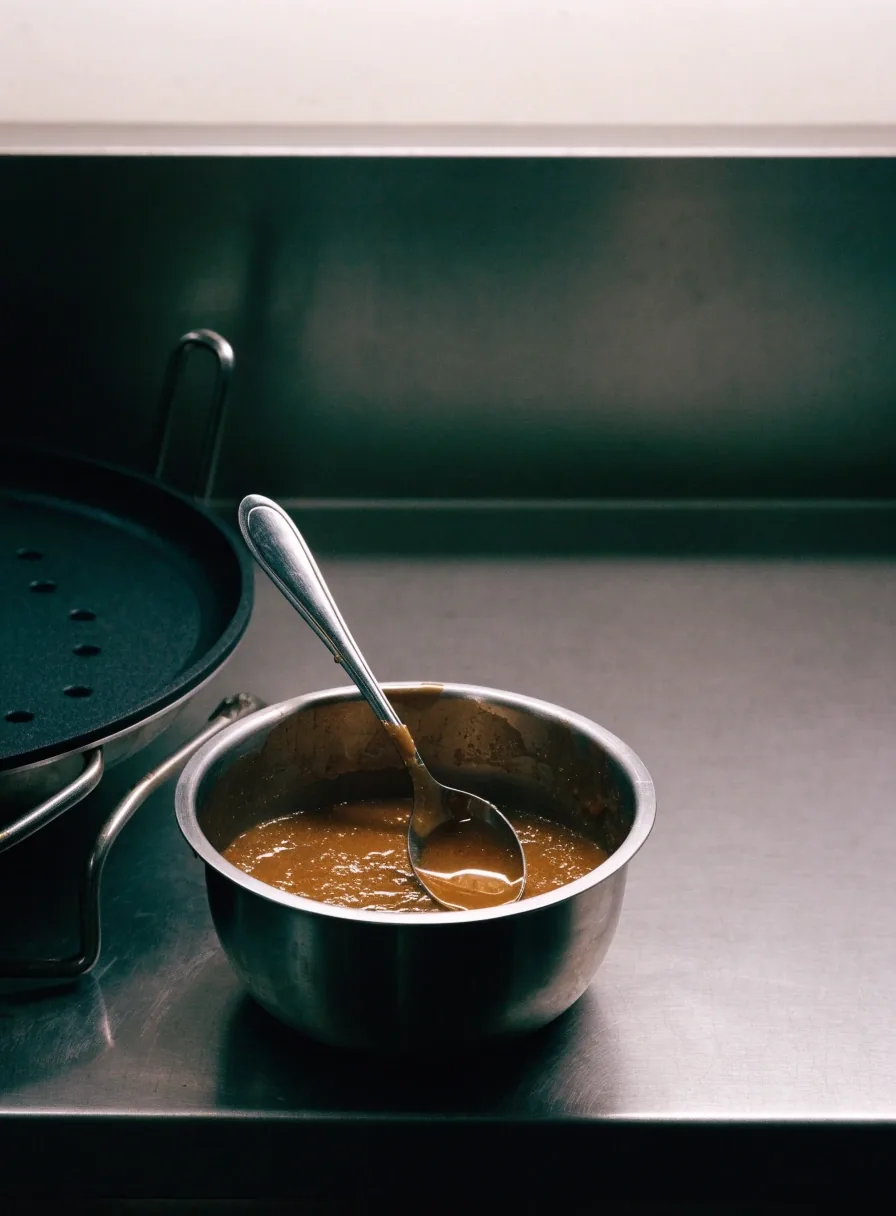
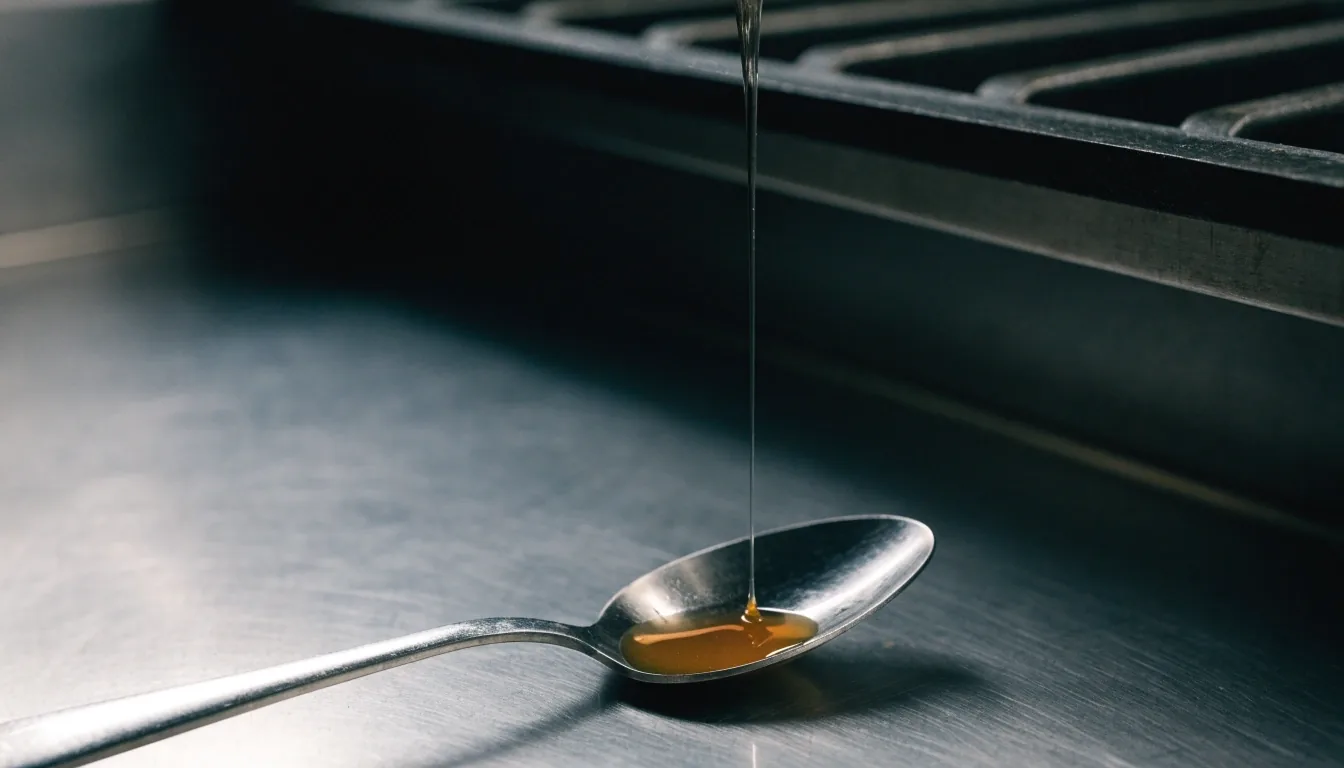
A slow syrup ribbon falling from a steel spoon onto a brushed steel counter under hard overhead light

Techniques

Kitchen techniques and adjustments that fix a plate

This page is the one you come back to when a recipe is close but not right. Heat, ratio, timing and temperature at serving are almost always where the problem lives.

Ratio and body

What sugar and water actually do

A one-to-one simple syrup by volume is thin and pours easily. Cook it longer and it thickens as it cools.

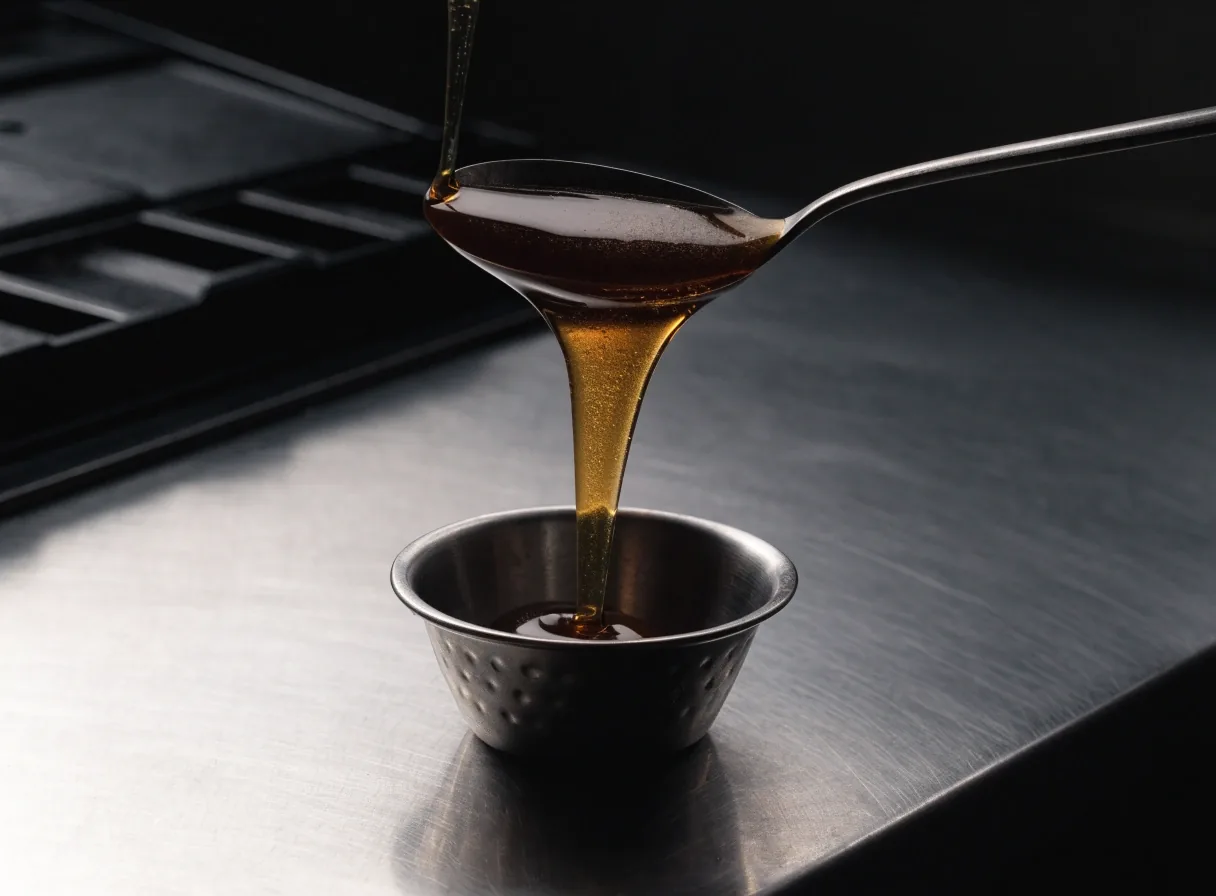
A thick amber syrup ribbon pulling off a steel spoon above a small steel ramekin

Sugar dissolves into water, and the more sugar in the water, the thicker the result. A one-to-one ratio gives you a thin syrup that pours easily and soaks the waffle fast. Push the sugar up or cook the water off and the syrup turns to something with body: it coats the spoon, it clings to the waffle edge, and it behaves more like a sauce than a glaze. That change happens on the stove, not in the jar — and the hardest part of getting it right is that the syrup keeps firming up after you pull it off the heat.

A syrup that looks right in the pan can be too thick ten minutes later on the plate. Pull it off the heat earlier than looks correct. If you are working with waffle house waffle syrup ingredients at home — sugar, water, and a knob of butter — the whole game is the point at which you stop cooking. Cold syrup from the fridge will always read thicker than the same syrup warm; bring it to room temperature in a pitcher of warm water before you judge it.

1 : 1

Thin simple syrup. Pours, soaks, needs no spoon.

1.5 : 1

Coats the spoon, holds a ribbon, still pours warm.

2 : 1

Sauce territory. Spoonable, clings to a waffle edge.

Heat and darkness

Cooking sugar without burning it

Brown sugar and butter scorch quickly. The fa carries heat straight into the sugar and the sugar darkens before you see it coming.

Stovetop method

Medium heat, then hands off

Start at medium heat with constant stirring until the sugar dissolves and the mixture goes clear. At that point, stop stirring. Let it sit at a low simmer and let the water cook off. Stirring past that stage encourages the sugar to crystallize and gives you a grainy syrup instead of a smooth butter spread. Watch the pan, not your timer: a brown sugar butter syrup will turn from amber to a deep caramel in under a minute once the water is gone.

If it smells sharp rather than caramel, it has gone past where you want it. A waffle house style butter spread recipe lives or dies on this window. There is no fixing a burnt sugar syrup — coffee grounds, milk, a splash of vanilla: none of them cover scorch. Start over. It takes six minutes and the second pan is always the better one.
After the pan

Adjusting consistency after the fact

You do not have to throw it out. Almost every hot syrup can be nudged back toward where you wanted it, off the heat.

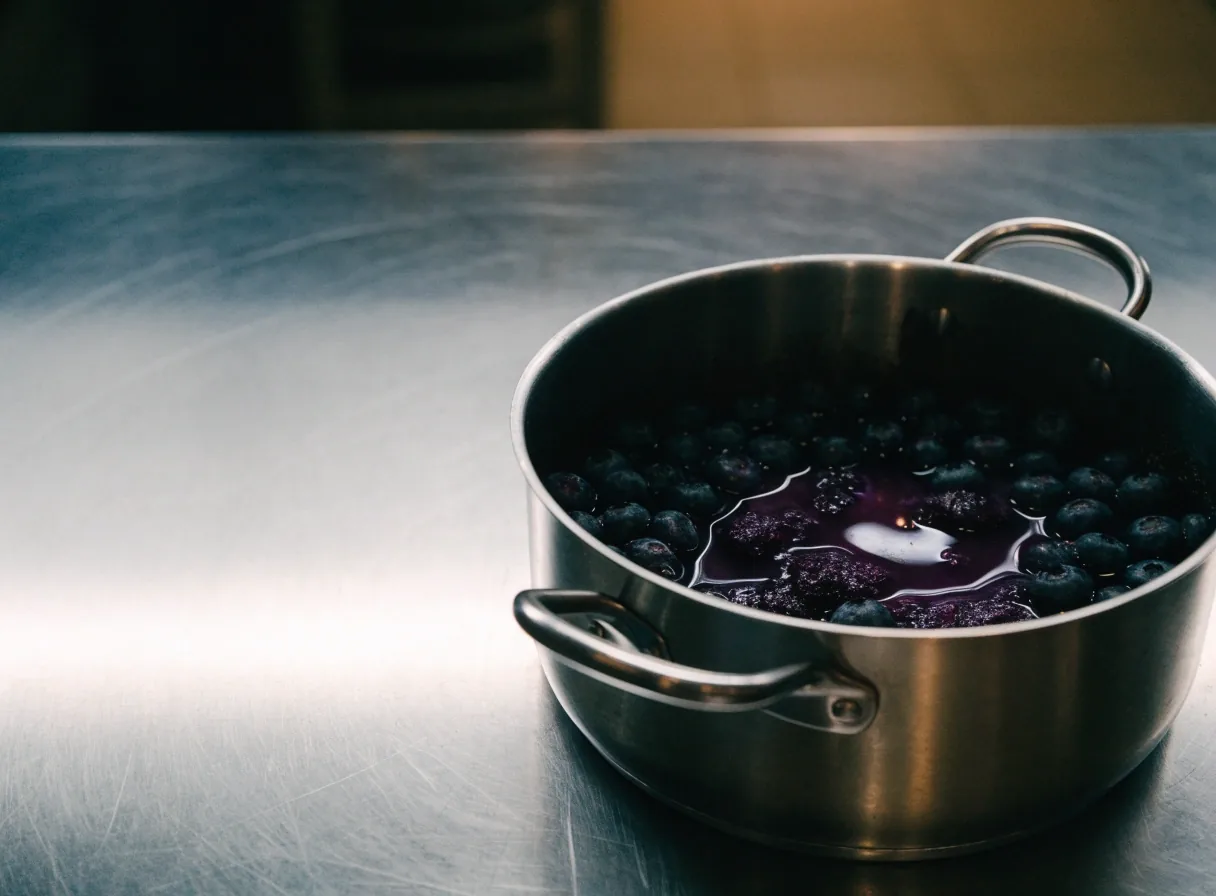
A steel saucepan of blueberry compote reducing on a warm stainless surface

Too thick

Add hot water a spoonful at a time, always off the heat. Give each spoonful ten seconds of stirring before you decide you need another. Cold water will seize a syrup that has already thickened; hot water blends back in without a fight.

Too thin

Simmer with the lid off for another minute or two — and account for the thickening that happens as it cools. Pull a spoonful onto a cold plate, let it sit for two minutes, and taste it at the temperature your waffle will be.

Fruit sauces that will not hold

A fruit sauce that will not set can be helped by a longer reduction, or by mashing rather than blending so the fruit pieces do the work of holding the sauce together. If you blended a fruit sauce smooth and it reads watery on the waffle, give it eight more minutes at a low simmer with the lid off and stir less. The bulk comes back from the fruit, not from added sugar — that is what keeps a copycat waffle house waffle topping tasting like the fruit rather than like syrup with a color in it.

Texture on the plate

Toasting nuts for texture

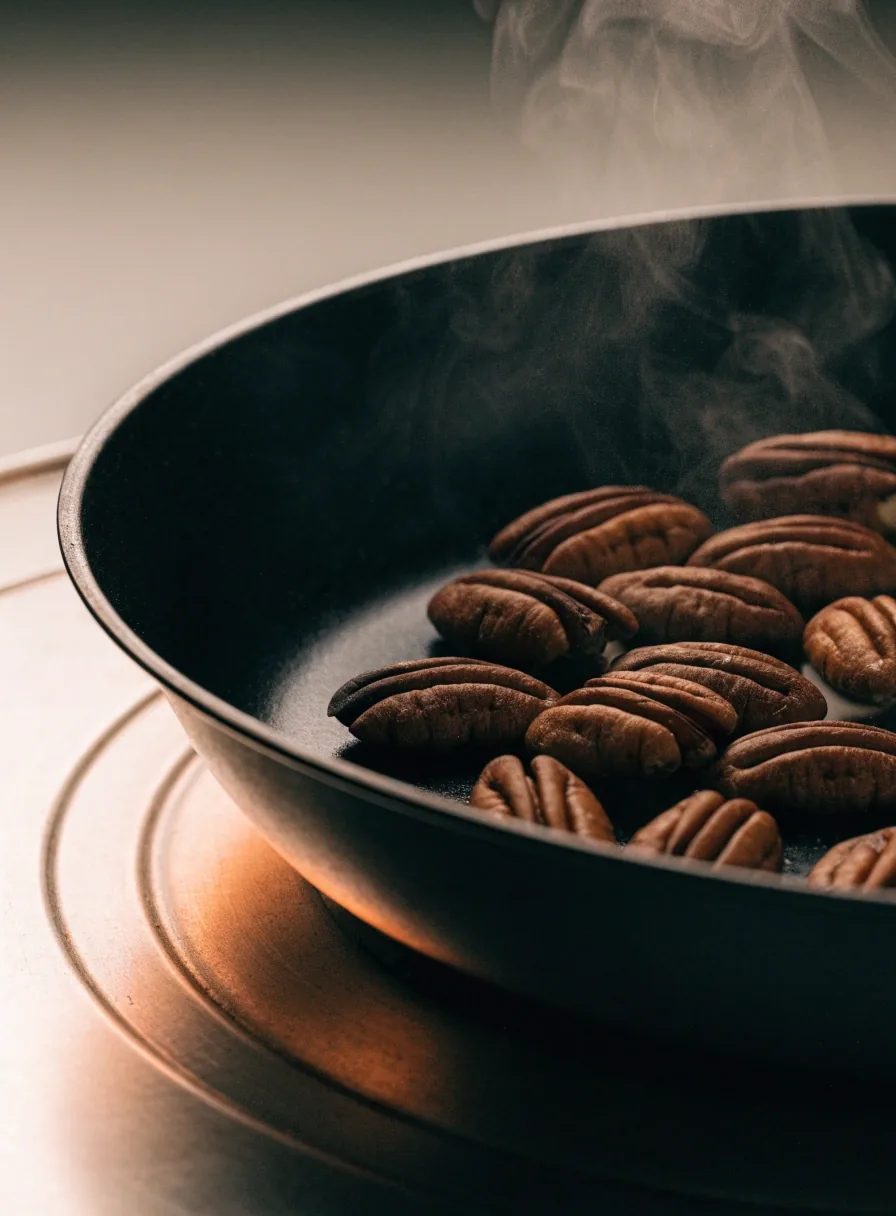
A dry skillet over medium heat, three to four minutes, moving them often. Toasted nuts hold their crunch longer on a plate, which matters on a waffle that is already soft.

Pecans are done when they smell nutty and have darkened slightly. Take them out of the pan immediately — the residual heat keeps cooking them, and the difference between toasted and bitter is about thirty seconds. Cool them on a flat plate, never stacked, so the steam escapes and the crunch sets. A waffle house pecan waffle recipe earns its reputation on this step far more than on anything you do to the batter.

Pecan halves toasting dry in a black steel skillet on a warm steel surface
Dry skillet, three minutes
A steel bowl of peanut butter loosened with warm syrup, a spoon resting across it
Loose, pourable, warm

Nut butters — thin with a spoonful of warm syrup or hot water, off the heat, then stir until it pours in a ribbon.

Cool completely — warm nuts on a warm waffle go soft. Give them ten minutes on a flat plate first.

Temperature at serving

10min

The window between pulling a syrup off the heat and the plate reaching the table — that is the whole temperature question.

Cold toppings on a hot waffle is the fastest way to a soggy plate. Warm sauces in a small pan, or set the jar in a pitcher of hot water for a few minutes while the iron heats. Whipped cream comes out of the refrigerator at the last moment. Butter-style spreads sit better at room temperature than cold from the fridge — they melt into the waffle instead of sitting on top of it.

If you are serving several people, keep everything at the table and let the waffles go straight from the iron to the plate. Pouring sauce onto a stack of waiting waffles is where texture goes to die — the bottom waffle is already turning soft by the time the last one comes off. Serve the syrup warm on the side and let each person dress their own plate. It is a small habit, and it does more for a homemade waffle house syrup than another pinch of sugar ever will.

Balance

Salt, acid, and why sweet needs both

A syrup that tastes flat is usually missing salt. A fruit sauce that tastes heavy is usually missing acid. That is the entire diagnosis, and it almost never needs more sugar — adding sugar to a flat syrup just makes it sweeter and flatter at the same time.

  • ¼ tsp Fine salt in a small batch of butter syrup Salt
  • 1 squeeze Lemon in a fruit sauce that tastes heavy Acid
  • 1 tsp Unsalted butter stirred in at the very end Fat

Try salt and acid before you add more sugar. A quarter teaspoon of salt in a small batch of butter syrup, or one squeeze of lemon in a fruit sauce, changes the whole plate with almost no effort. Taste a spoonful after each addition and stop when the flat note goes away.

Batch size

Scaling changes timing, not ratios

Doubling a syrup is safe — the ratios hold and the timing barely moves. Doubling a fruit sauce is not, because a larger surface area evaporates faster and the sauce thickens before the fruit breaks down. That is the whole reason a big batch of the same recipe from a small pan can taste different, even when every quantity was correct.

Use a wider pan on lower heat and judge by texture. For a big batch, two smaller pans give more consistent results than one large one — they give you two working surfaces for the same volume of fruit, and each one reduces closer to the timing you already know. If you must use one wide pan, drop the heat one notch below where you would normally set it and let the fruit catch up.

For a doubled batch

Wider pan

More surface evaporates faster. Bigger pan, lower heat.

Two pans

More consistent than one large one for the same total volume.

Judge by texture

Not by minutes on a timer. Pull it early — it thickens as it cools.

Habits worth keeping

A short list worth writing down

Taste before you serve, and adjust. Write down what you changed, because the second batch is where the recipe becomes yours.

Keep a jar of simple syrup in the refrigerator for the weeks when you want a topping without cooking one. And keep the wet components separate from the crisp ones until the plate is in front of someone.

Questions about a technique? Reach the kitchen at IsidoroTellez@derryheydon.com or +12067676896 — 6545 Delridge Wy SW, Seattle, WA 98106, USA.

6545 Delridge Wy SW
Seattle, WA 98106

Monday–Friday
9:00 AM – 6:00 PM

+12067676896
IsidoroTellez@derryheydon.com

Adjust with confidence — the plate tells you what it needs