
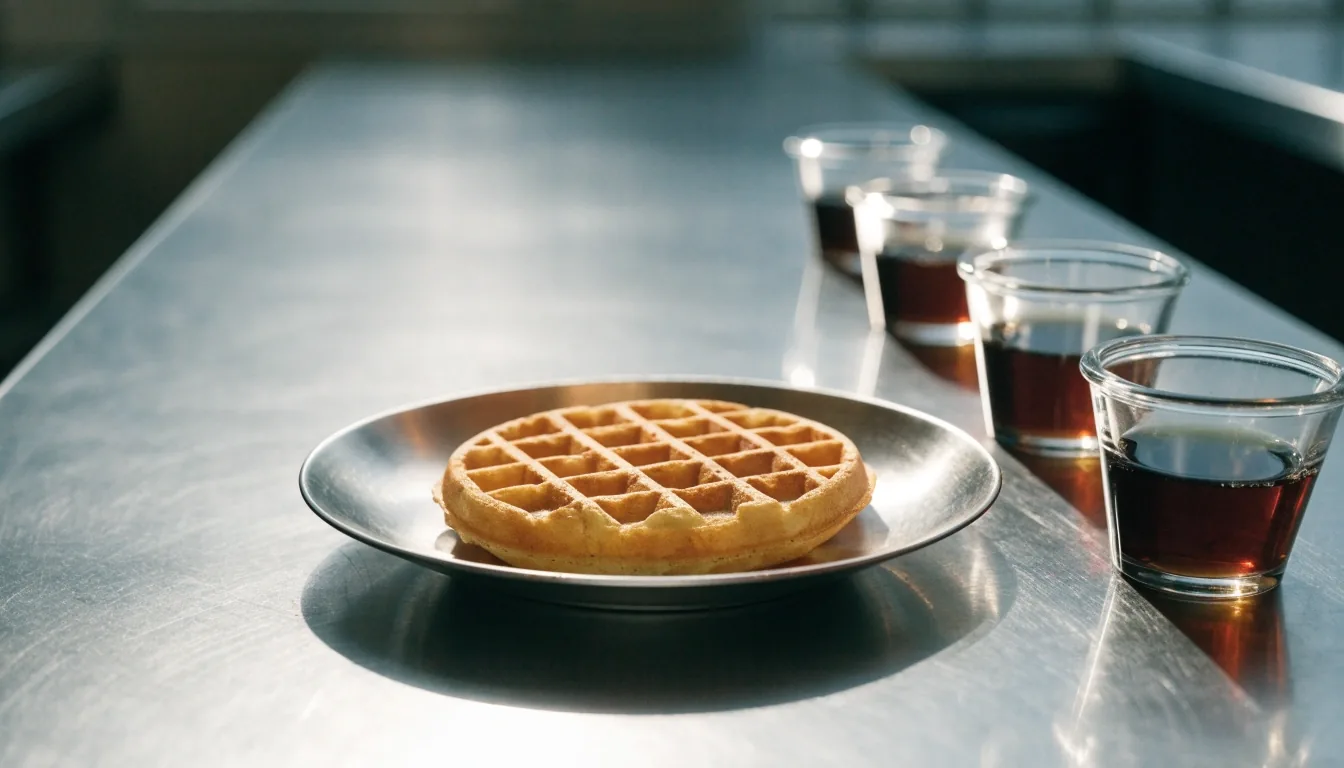
Homemade diner-style syrups & toppings
Four ramekins. One waffle. Build your own counter.
Brown sugar butter syrup, blueberry sauce, toasted pecan, pourable nut butter — written for a home kitchen, tested on a lid-closed iron, scaled to two or four plates.
Start here
Start with the syrup question
Most people arrive wanting one thing: a syrup that tastes richer than what comes out of a plastic jug. Brown sugar butter syrup is the answer for a lot of them. Brown sugar and butter cook into something with more body than plain maple, and the molasses note in the sugar does most of the work.
If you want that flavor without the dairy, make the same syrup with a neutral oil and a pinch of salt, and expect a thinner pour. That is the whole of the swap: the sugar does the sweetening, the fa carries it, and the salt keeps it from sitting flat on the tongue.
Ramekin lineup
Five pours worth learning
Each of these is a bottle at the pass — a base you can pull out of the refrigerator on a Sunday morning and warm in a minute.
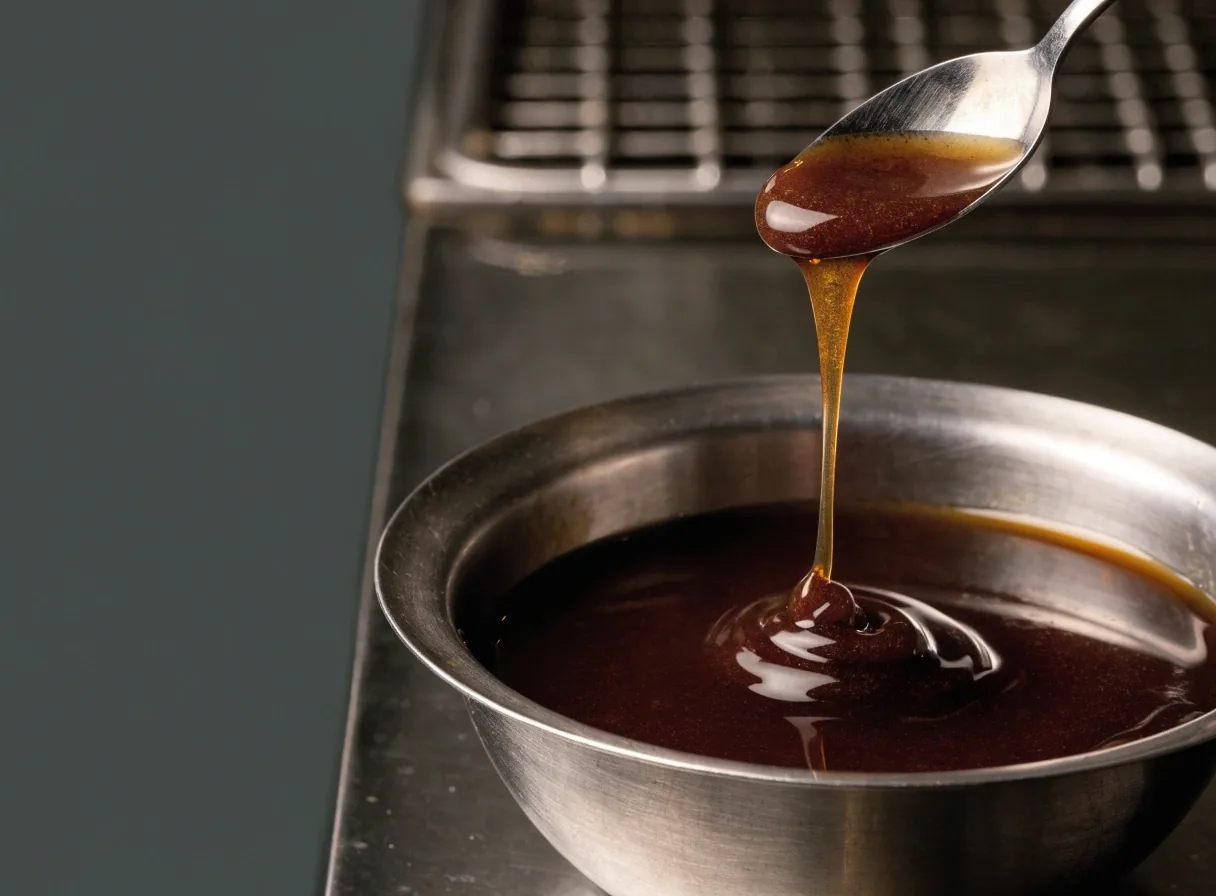
Brown sugar butter
The diner-style butter spread that gives a syrup more body than plain maple.
Base 02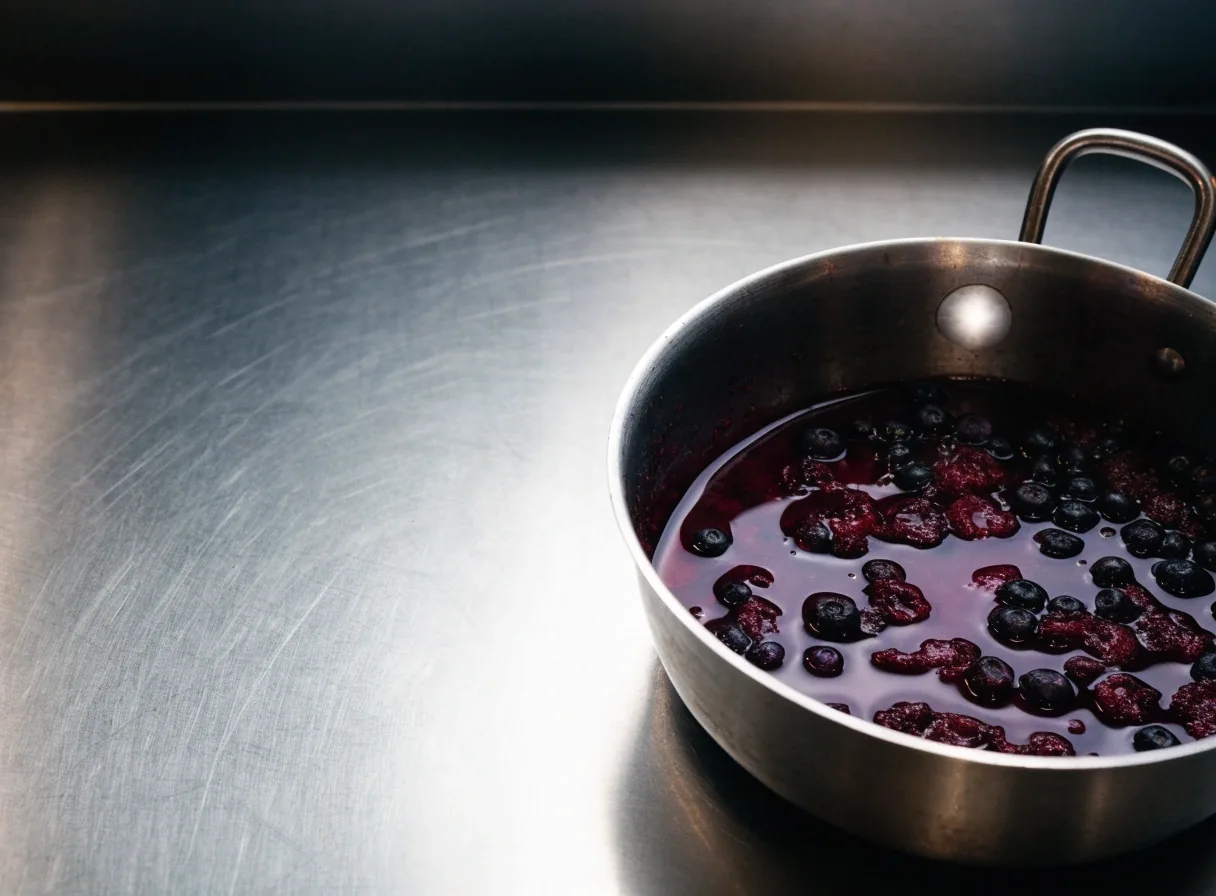
Blueberry sauce
Cooked fruit that clings to the waffle grid instead of sliding off it. Warm, always.
Base 03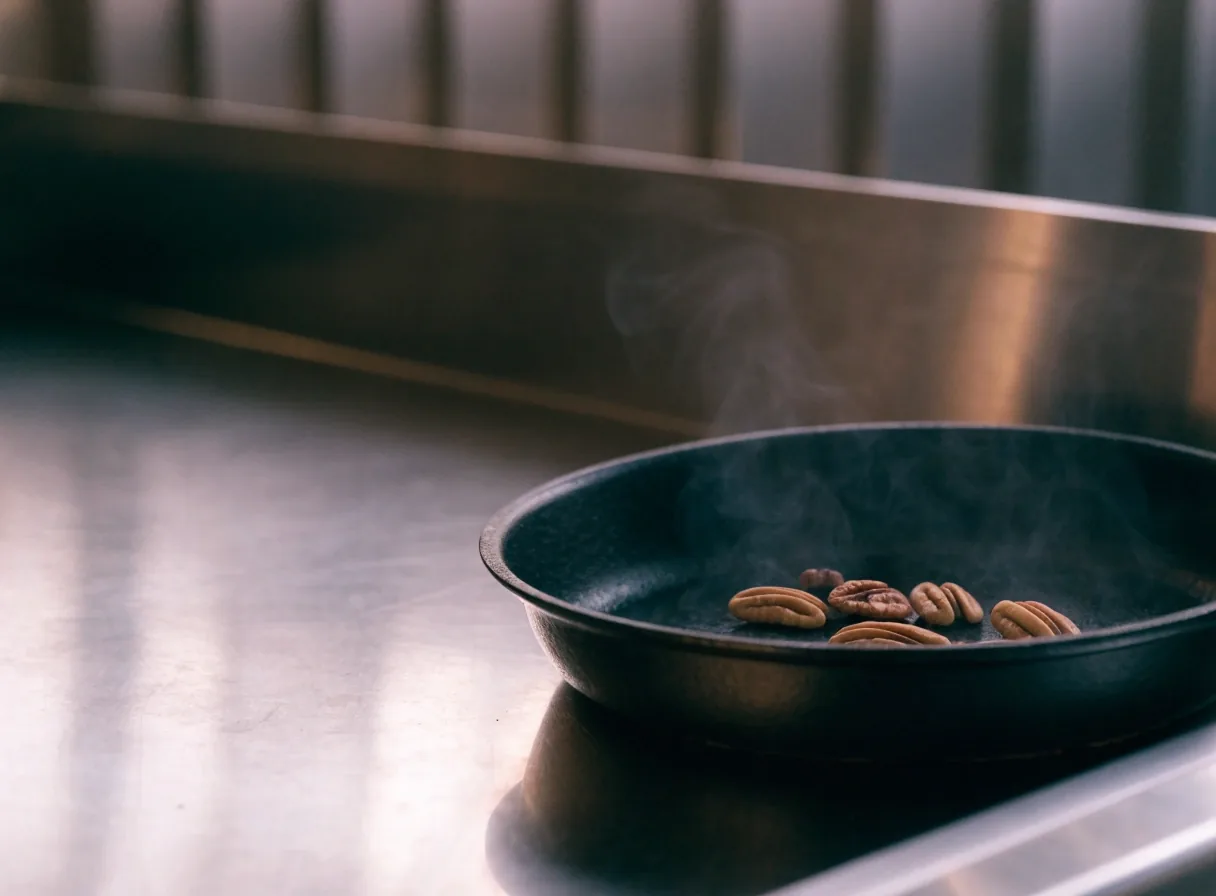
Toasted pecan
Crunch the soft waffle otherwise lacks — toasted dry, added at the plate, never in the syrup pot.
Base 04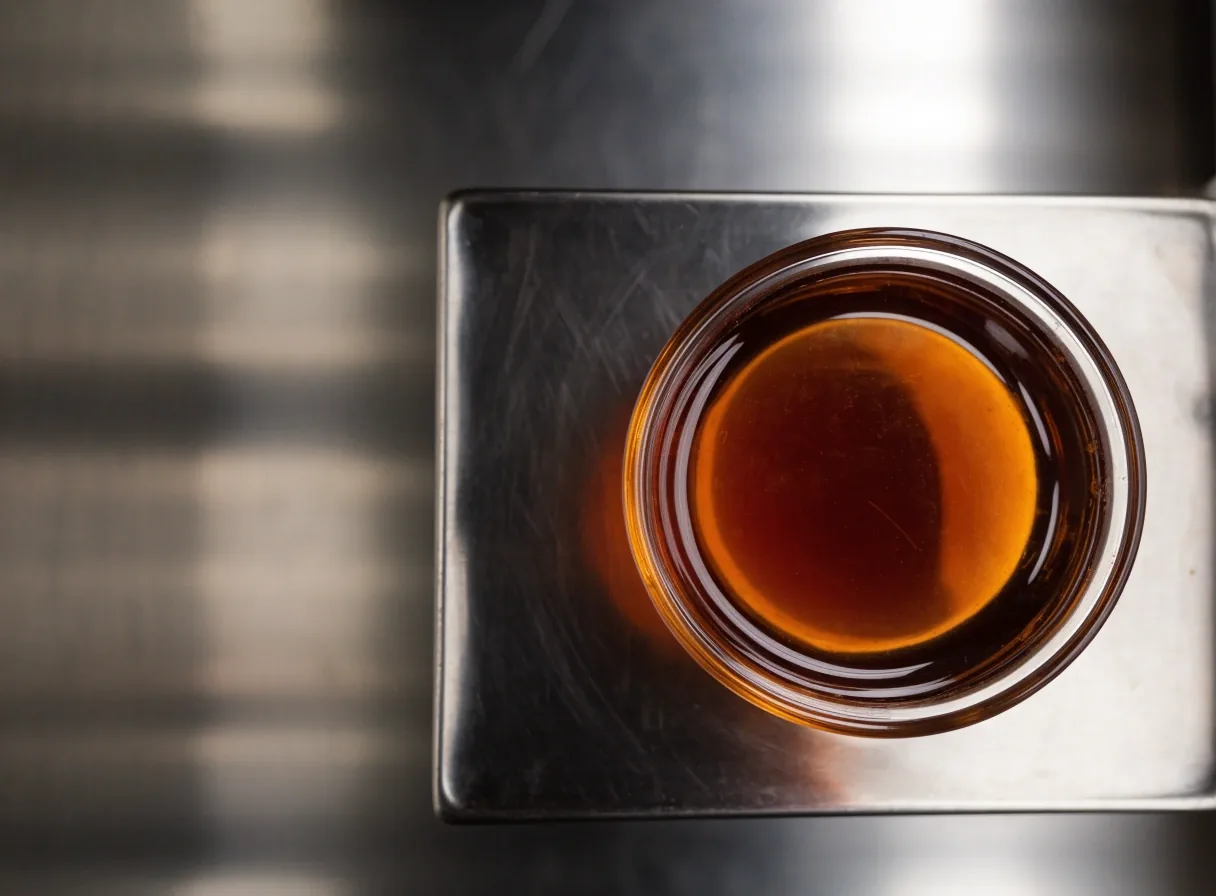
Simple syrup base
One-to-one sugar and water, split into jars and flavored vanilla, almond, or cocoa.
Hot today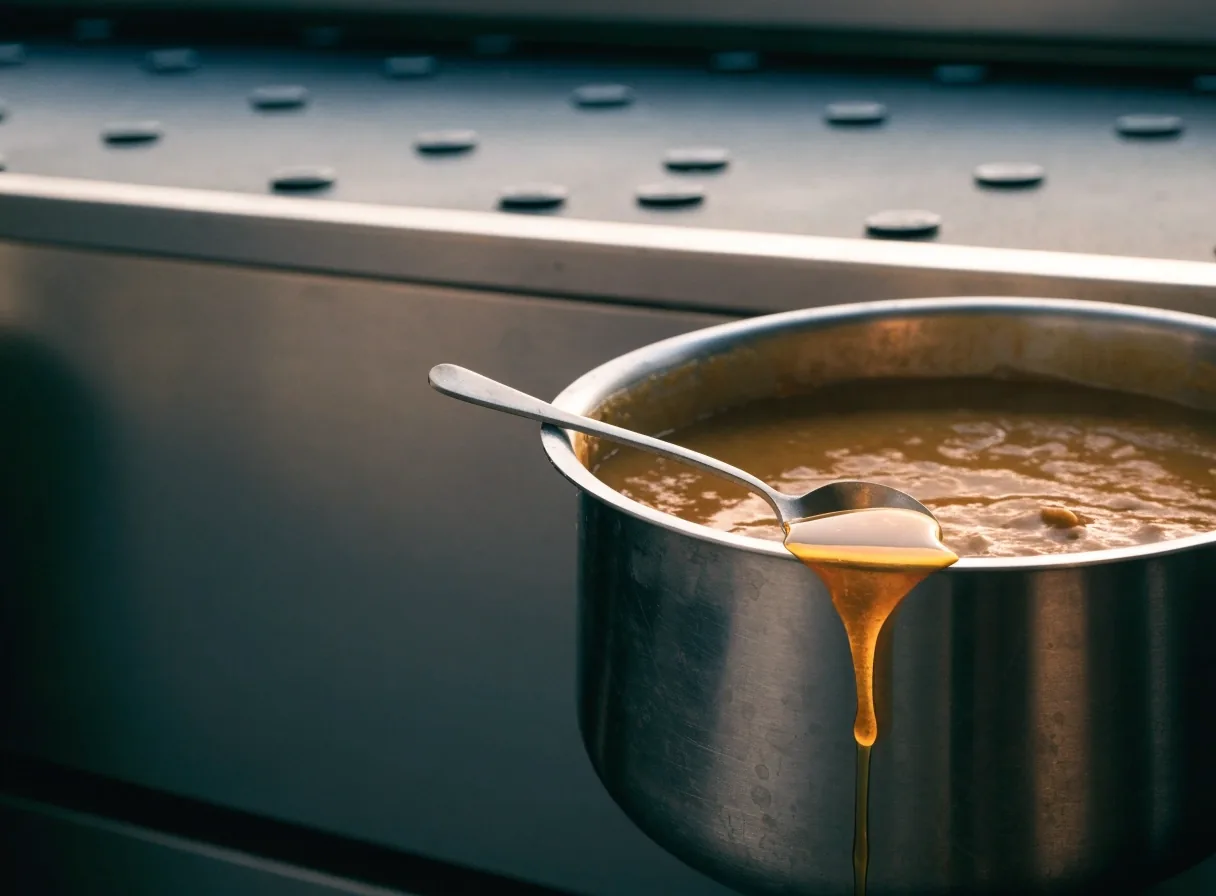
Pourable nut butter
Warmed with a spoon of simple syrup until it ribbons — the difference between a spread and a topping.
The cook-step run
Four steps to a pourable ribbon
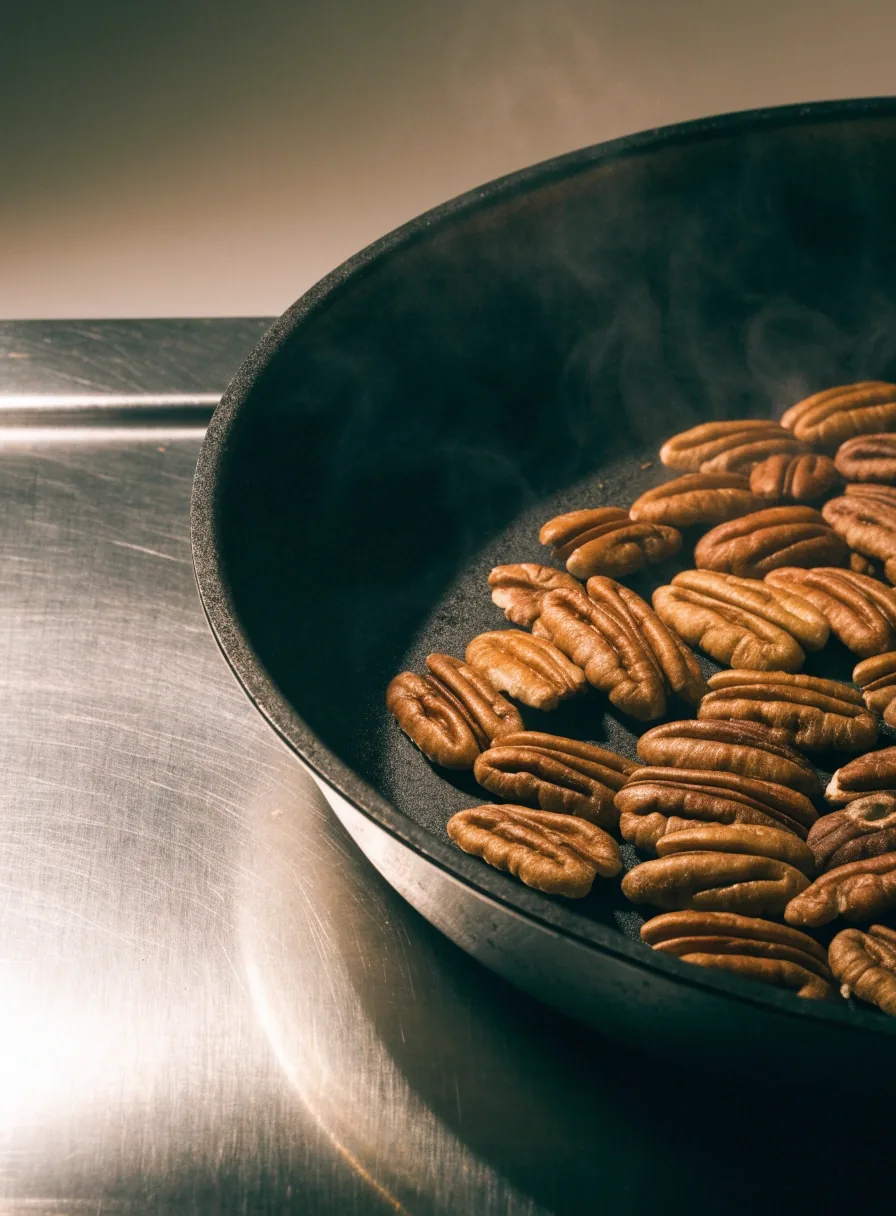
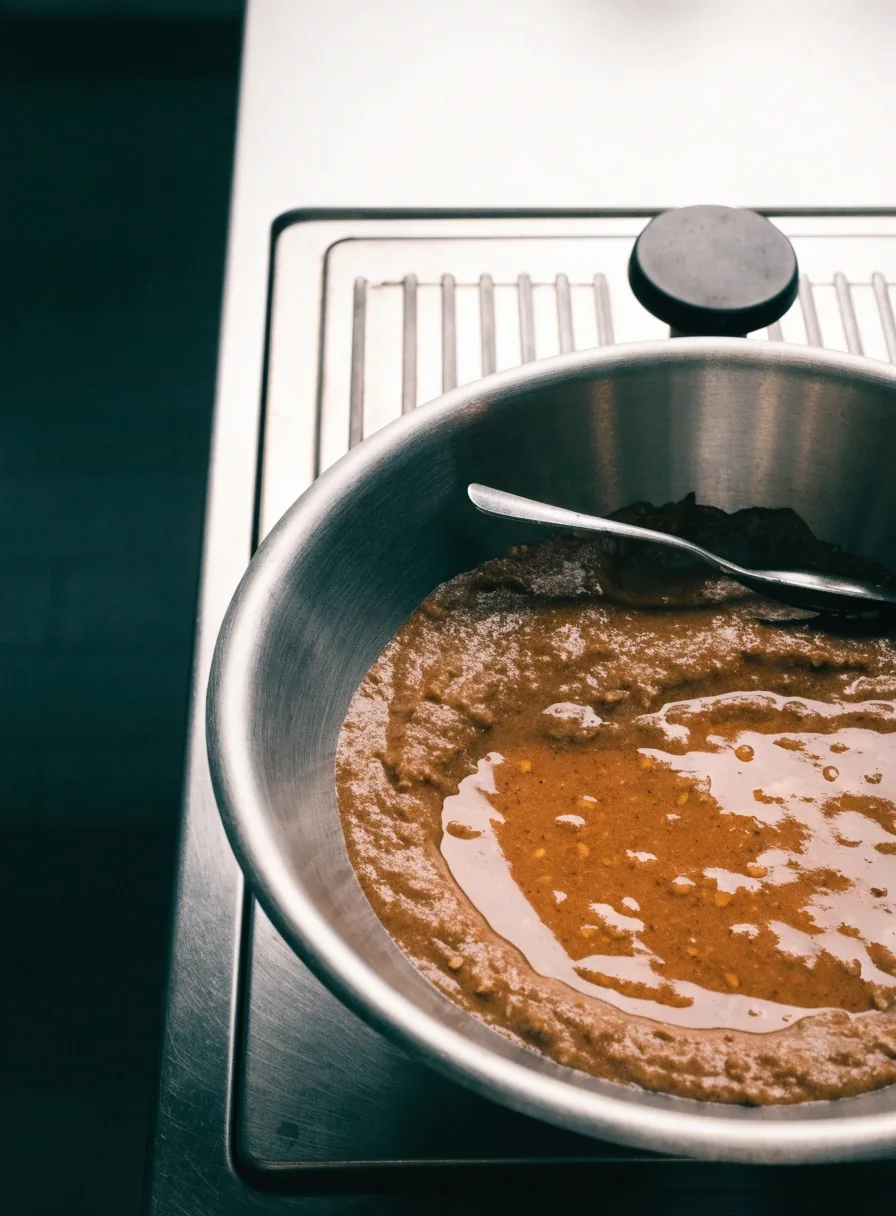
Read left to right. Each frame is the check worth making before you pour: the sugar dissolved, the fruit broken down, the nuts dry-toasted, the base thinned.
-
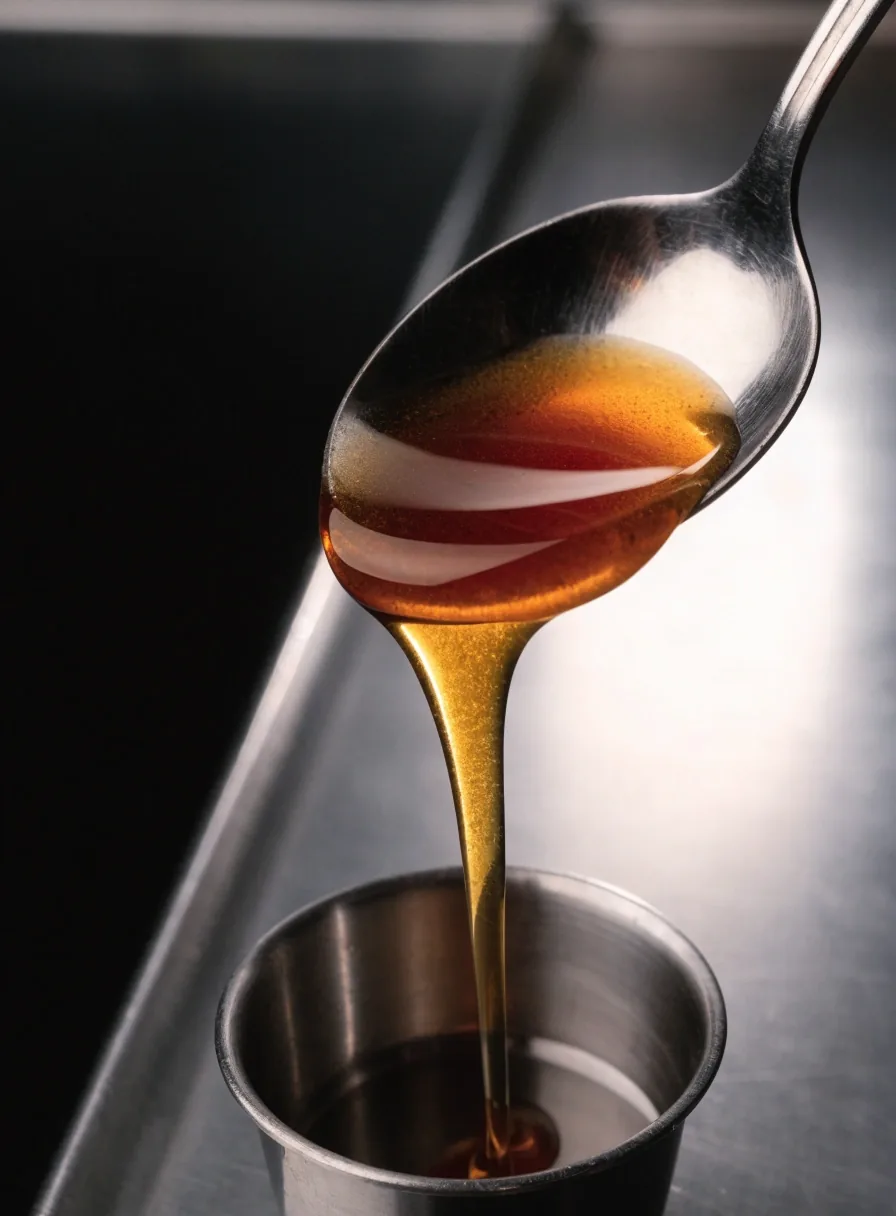
Sugar fully dissolved
01
-
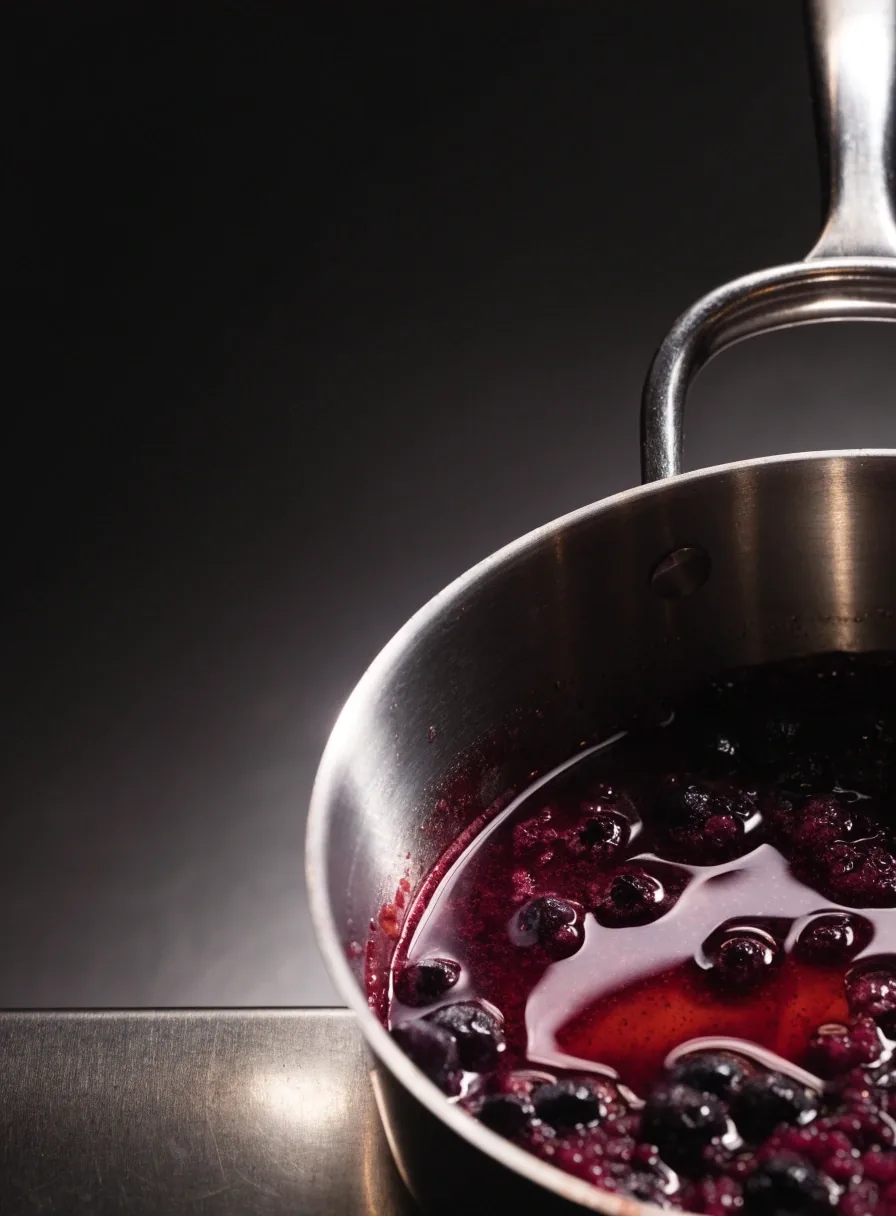
Berries broken down
02
-
Nuts dry-toasted
03
-
Thinned to a ribbon
04
What the words mean here
Sauce, syrup, and drizzle are three different things
The words get used loosely. On this site, a syrup pours in a thin stream and soaks in. A sauce is thicker and sits on top, like blueberry or a cooked caramel. A drizzle is a finish: something you apply in a thin line for contrast, usually after the plate is built. Knowing which one you are making tells you how long to cook it — and how the visitor should plate it.
- Syrup
- Thin, pours, soaks in. Underneath or beside the waffle.
- Sauce
- Thicker, sits on top. Cooked fruit or a finished caramel.
- Drizzle
- A finish applied in a thin line, for contrast, after the plate is built.
Waffle structure
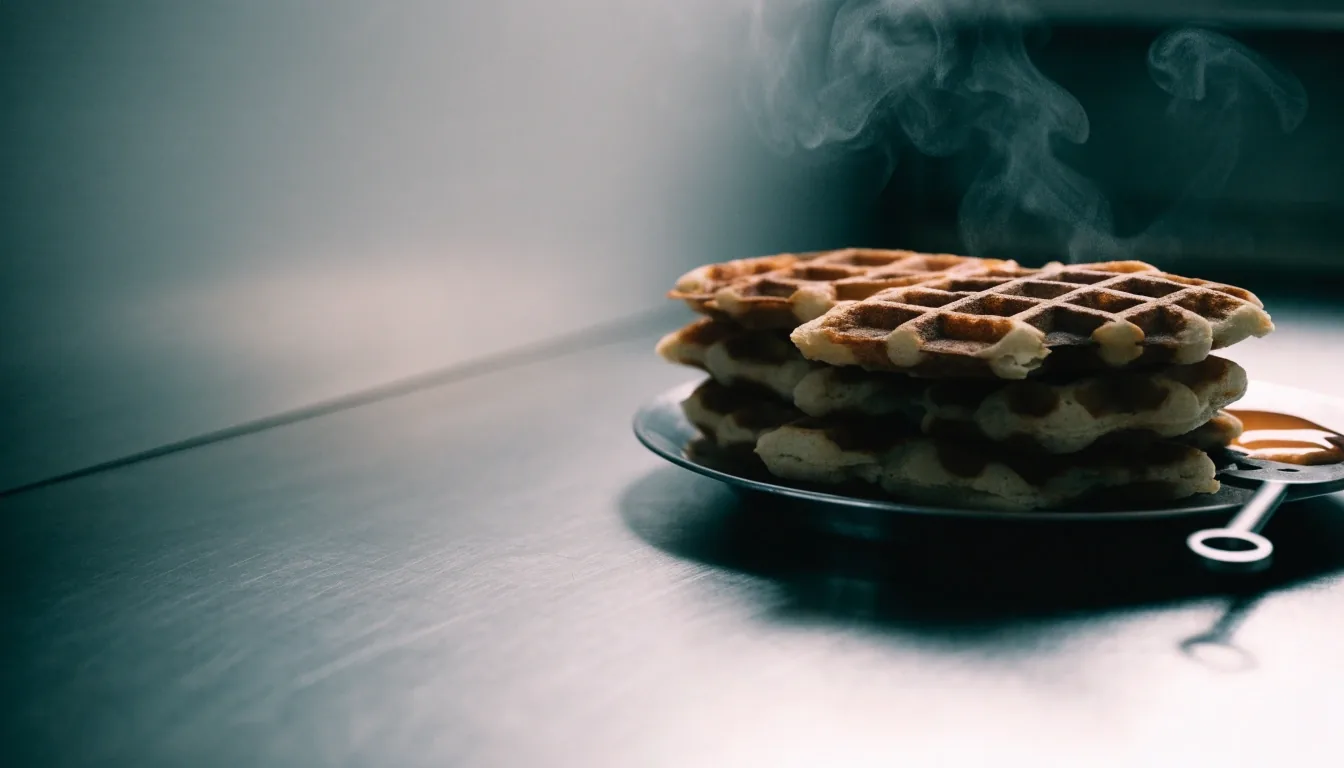
Crisp at the edges, holding the pour
Crisp waffles stay crisp when the wet components go on last and in small amounts. Powdered sugar, toasted nuts, and whipped cream sit on the surface. Syrup goes underneath or beside.
If you are serving four plates, keep the sauce warm in a pitcher and let people pour their own; the waffle holds its edge for several minutes longer that way. The waffle recipes page is for the base that has to hold up under a heavy pour — a stiffer, well-rested batter with a hot iron and a full bake before you open the lid.
Get the waffle base recipeThe topping shelf
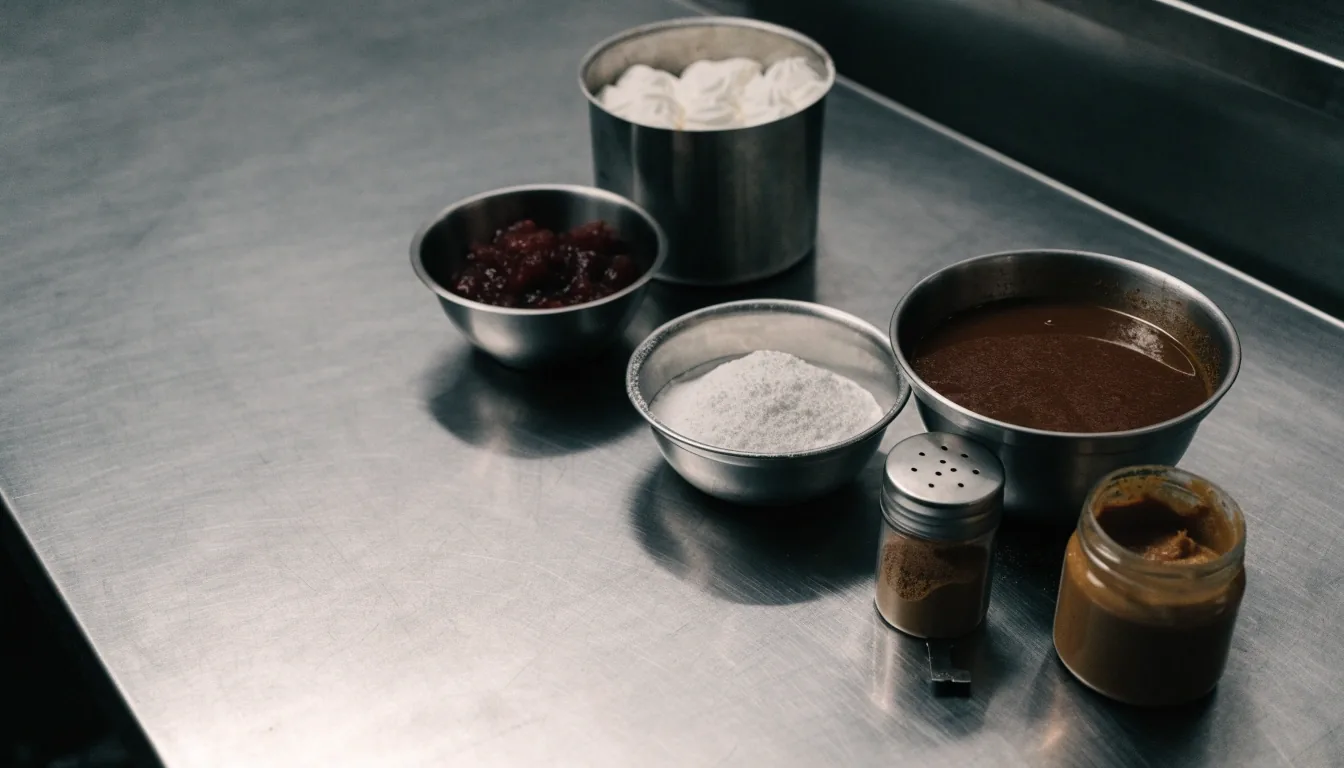
Everything that sits on the surface
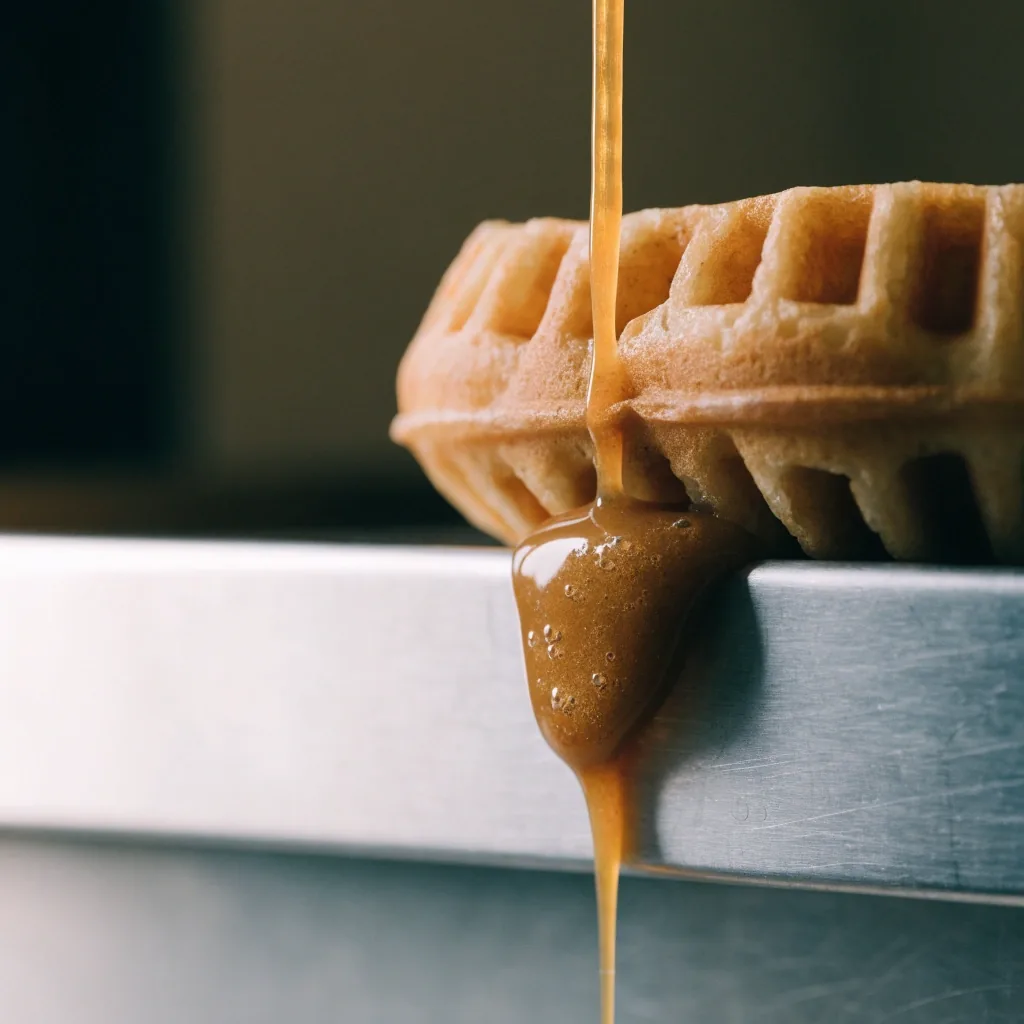
Toppings that do not turn the waffle to mush: the wet components go on last and in small amounts.
Pantry note
Sourcing and season
Blueberries are worth buying in summer and freezing for the rest of the year; the sauce does not care whether they started frozen. Pecans keep longer in the freezer than the pantry. Brown sugar hardens, so keep it in a sealed jar with a slice of bread if your kitchen runs dry in winter. None of these are expensive habits.
See the topping combinationsScaling for a crowd
Doubling a syrup is easy. Doubling a fruit sauce is not.
Doubling a syrup is straightforward; doubling a fruit sauce is not, because a wider pan evaporates faster and the sauce thickens before the fruit breaks down. Use a larger pan and lower heat, and judge by texture rather than by the clock. For eight or more plates, make two smaller batches rather than one big one — the second batch takes six minutes and it keeps the fruit texture you were after.
What this site is not
This is an independent recipe resource. It is not affiliated with any restaurant, and the syrups here are home versions built from ordinary ingredients — brown sugar, butter, fruit, nuts, and water you can taste before you commit a whole batch.
If a method does not work in your kitchen, the contact page takes corrections, and corrections get tested against the same standard the recipe was written at.
Where to go first
Pick the guide that matches your plate
If you have never made a syrup, start with brown sugar butter. If you already have one you like, add pecan or blueberry next.
- 01 Syrups & Sauces Brown sugar butter, blueberry, simple syrup base, and the sauce-versus-syrup difference. Amber · thick
- 02 Toppings Toast nuts, drizzle caramel, layer whipped cream — without turning the waffle to mush. Crunch · on top
- 03 Waffle Recipes The base that holds up under a heavy pour — rest, bake, and break the lid at the right moment. Base · structure
- 04 Techniques What to do when a sauce comes out too thin, too thick, or grainy at the end. Method · fix
Common questions
The four things people ask first
Short answers to the questions that come up in email — the ratio, the thickener, the toppings that stay put, and how to keep the waffle crisp at the table.
Write to the kitchen
- 6545 Delridge Wy SW, Seattle, WA 98106, USA
- +1 206 767 6896
- IsidoroTellez@derryheydon.com
- Monday to Friday, 9:00 AM – 6:00 PM
How do I make a butter-rich syrup that tastes more like a diner topping than plain maple syrup?
Cook brown sugar with butter and a small amount of water until the sugar dissolves and the mixture thickens slightly. The molasses in brown sugar and the fa from the butter give it more body than maple. Serve it warm; it thickens as it cools.
What is the best homemade base syrup for waffles if I want to add flavorings later?
Simple syrup. Simmer equal parts sugar and water until the sugar is fully dissolved, cool it, and add extracts or a spoon of cocoa off the heat. It keeps for weeks in the refrigerator and freezes well in an ice cube tray.
Which toppings work best on crisp waffles without making them soggy?
Toasted nuts, powdered sugar, and whipped cream sit on the surface. Syrups soak in, so pour them beside the waffle or in a small amount. Adding wet toppings at the table rather than in the kitchen makes the biggest difference.
How do I turn peanut butter into a pourable waffle topping?
Warm it with a spoonful of simple syrup or hot water and stir until it runs off the spoon in a ribbon. Salted peanut butter balances a sweet plate better than unsweetened.
What is the difference between a sauce, a syrup, and a drizzle for waffles?
A syrup is thin and pours; a sauce is thicker and sits on top of the waffle; a drizzle is a thin finish applied over the top for contrast. The words describe texture and how you apply them, not the flavor.
How do I make a fruit topping thick enough to stay on the waffle?
Cook the fruit with sugar until it breaks down and the liquid reduces, then take it off the heat and finish with vanilla and lemon. If it is still loose, simmer a few minutes longer. It will also thicken as it cools.
Close the ticket
One batch of batter. Four finishes on the counter.
Start where your morning already is. If the plate needs a syrup, a sauce, a crunch, or a base that can hold all three, one of these routes gets you there — and the contact page takes corrections when a method does not land in your kitchen.